
Abstract
A decision-making model for social media addiction is established. Fuzzy mathematics and BP neural networks are used in the model. There are chosen six judging directories. Quantitative directories’ subsidiary grade functions are organised. Expert scoring confuses the qualitative directories. College students who use networks are randomly chosen as samples. The trial demonstrates that the procedure could effectively and accurately carry out the choice on Social Media dependence.
Introduction
Experts in education and psychology have become more interested in social media addiction [1]. An alienist in New York [3] and a psychiatric expert at the University of Pittsburgh both confirmed the existence of social media addiction after it was first proposed. Those impulsive and erratic online behaviours are referred to as social media addiction. Currently, persons are evaluated using a questionnaire based on the Social Media Addiction Scale. High accuracy, however, cannot be achieved [5].
Although fuzzy mathematics can improve accuracy, they cannot learn on their own [6]. Neural networks mimic the fundamental brain activities. It has been used in analytical prediction and pattern recognition. The error back propagation neural network, often known as the BP neural network, has been widely employed up to this point. Harvard University donated the BP neural network in 1974. Without a prior description, the arbitrary non-linear representation relationship between input and output can be realised. Other benefits of the BP neural network include fault tolerance, classification ability, parallel processing, and self-learning. In this study, a new way of determining social media addiction was provided by the neural network.
The Fundamentals Of Neural Networks Concepts
Input, output, and hidden layers make up the BP neural network. The neurons in one layer are linked to those in the one below it. And weights represent the connections. Figure 1 depicts the topology of the three-layer BP neural network. In actuality, the network may contain numerous hidden layers. According to research, three-layer neural networks may realise any complex representation relation. In the model, this type of three-layer was chosen.
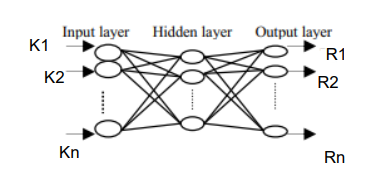
Figure 1: The structure of the BP neural network
Forward and backpropagation are the two main components of the BP neural network’s learning process. The input model is sent from the input layer to the hidden layer and output layer during the forward propagation process. The mass and thresholds will be modified to reduce the error if the desired output is not achieved in the output layer, and the error signal will be transferred from the output layer to the input layer. Until the mistake is smaller than a minor integer, the process will loop.
The Development Of A Fuzzy Neural Network-Based Decision-Making Model For Social Media Addiction
It was decided to use a three-layer fuzzy neural network. Figure 2 shows the prototype.
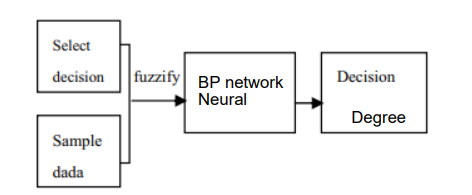
Figure 2: Decision-making model for social media addiction that uses a fuzzy neural network.
Selects Directories
The primary aspect that can affect a child’s behaviour about addiction to social media is the parents’ educational approach [8]. The goal of using social media (PUSM), the frequency of use (NUTEW), the average amount of time spent on each use (ADET), the relationship with peers (RSMTS), telekinesis (Ts), and the relationship with parents (Rp) were chosen as the social media addiction evaluating directories [9]. These six directories were divided into three categories: behaviour aspect, internal values, and external values. In Figure 3, this is displayed. ADET and NUTEM are included in the quantitative directories.
Others are listed in high-quality directories. Secure, average, and low-resolution Ts were separated. PUSM was divided into playing games or making friends and playing games or gathering messages. RSMTS was categorised as excellent, ordinary, and subpar. Rp was classified as neutral, mediocre, and repulsive.
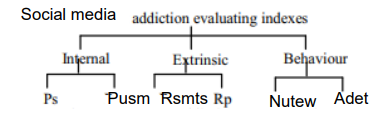
Figure 3: Assessing directories and social media addiction
Clarifies The Directories And Defines The Functions Of The Subsidiary Grades.
Grades 1, 2, and 3 are equivalent to independent, average, and dependent, respectively, on the scale used to assess social media addiction. Lower semi-trapezoid distribution functions transform the quantitative directories.
Expert grading techniques transform qualitative directories. The professionals use 10-minute systems to evaluate each index. The division of the grades is 10. The subsidiary degrees are the quotients. The SG of each directory is displayed in Table 1.
Table 1: The quality directories’ SGs.
| Directories SG | Evaluation 1 | Evaluation 1 | Evaluation 1 |
| Ts | 0.8 | 0.3 | 0.1 |
| 0.28 | 0.68 | 0.41 | |
| 0.02 | 0.2 | 0.90 | |
| PUSM | 0.75 | 0.12 | 0.02 |
| 0.2 | 0.7 | 0.44 | |
| 0.12 | 0.3 | 0.86 | |
| RSMTS | 0.78 | 0.3 | 0.02 |
| 0.24 | 0.6 | 0.25 | |
| 0.12 | 0.20 | 0.70 | |
| Rp | 0.85 | 0.3 | 0.02 |
| 0.3 | 0.7 | 0.26 | |
| 0.2 | 0.3 | 0.89 |
The neural network’s architecture consists of three output nodes and 25 input nodes. The SG of the six assessing directories is represented by the 25 input nodes. Calculating the test value using lower semi-trapezoid distribution functions yields the SG for the quantitative directories. For instance, the ADET is replaced with formulas 1, 2, and 3 and takes around 3 hours.
Then, we will get the SG (0.75,0.25,0).
The ADET is inserted into formulas 1, 2, and 3 and lasts for around 2 hours.
Afterwards, the SG (1,0,0) will be discovered.
The ADET lasts for roughly 6 hours and is used in place of formulas 1, 2, and 3.
The SG (0,1,0) will then be discovered.
The ADET lasts for roughly 12 hours and is used in place of formulas 1, 2, and 3.
Then we will get the SG (0,0,1).
By referring to Table 1, the SG of the qualitative directories can be found.
The SG (0.8,0.3,0.1) will then be discovered. The predicted output values (1,0,0), (0,1,0), and (0,0,1) are represented by three output nodes.
The “2P+1” approach, proposed by Hecht-Nielsen, can be used to choose how many nodes are in the hidden layer. The hidden layer nodes in the neural network have a total of 12 in terms of learning time.
The Neural Network’s Training Methods
R is the samples’ figure. Every sample’s input direction is given by the formula M=[Mr1, Mr2,…, Mrm]. The output direction is most likely to be L=[Lr1, Lr2,…, Lrn]. A1=[Ar11, Ar12,…, Ar1k] is the hidden layer’s input direction, while A2=[Ar21, Ar22,…, Ar2k] is its output vector. B1=[Br11, Br12,…, Br1n] serves as the input for the output layer, while B2=[Br21, Br22,…, Br2n] serves as the layer’s output. The mass of the KOi input layer neuron to the KOt hidden layer neuron is Wit. The ratio of the hidden layer’s KOt and the output layer’s KOj neurons’ masses is Vtj. The output layer is j, while the threshold of the nodes in the hidden layer is t. (1≤r≤R,1≤i≤m,1≤j≤n,1≤t≤k).
The first sample is entered into the input layer for the first time, and the hidden layer’s input value is computed in:
The hidden layer’s output value is as follows:
The output layer’s input value is:
Actually, the output value is:
Ds2 j = f (Ds1j)
The total error will be obtained after all the samples have been entered:
The learning process will end if the error is greater than a specified value or the learning circle number is greater than a specified value; else, the alignment errors of the output layer and hidden layer nodes will be calculated:
Nsj= (Rsi -Ds2j) X Ds2j X (1 – Ds2j)
Usj= ⅀ (Nsi -Vij) X (Zs2j X (1 – Zs2j)
The next time, the mass and the thresholds will be regulated:
V ′tj = Vtj + α × Nsj × Zs2x
σ ′j = σj + α × Nsj
W ′it = Wit + β × dsx× xsi
θ ′t = θt + β × dsx
It is the same as before when the learning process begins a second time. The mass and thresholds were trained using the MATLAB 7 neural network toolkit. 50 students were chosen at random to complete the questionnaire; 20% served as the testing set and 3% as the training set. Every student participated in the training process as a sample, and the method described above was used to collect input and output values. The error is less than 0.0001, and the first learning rate is 0.0001. The training process came to an end when 983 circled. The fluctuation of the error convergence curve is depicted in Figure 4.
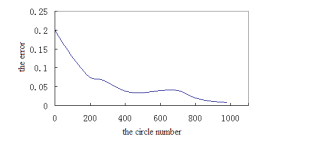
Figure 4: The curve of error convergence
The Model’s Evaluation The Trained Network Evaluated The 25 Samples.
The directories of the 5 participants are shown in Table 2
Table 2: The directories of the 5 participants
| Directories Sample | Ps | PUSM | RSMTS | Rp | NUTEW | A |
| 1 | Low decision | creation friends or playing games | Upright | balanced | 3.3 | 3.3 |
| 2 | Low decision | creation friends or playing games | Middling | odious | 10.1 | 7.2 |
| 3 | secure | making friends or playing games | Poor | middling | 6.2 | 3.3 |
| 4 | low-resolution | Collecting messages or making friends | Upright | middling | 8.2 | 6.1 |
| 5 | secure | collecting messages | Upright | harmonious | 5.1 | 2.2 |
Table 3 compares the real circumstance with the outcome of the judgement. The grade was determined in accordance with the maximum membership grade law. The decision’s outcome matches the facts of the case.
Table 3: Comparison between the real circumstance and the outcome of the choice.
| Sample | The actual grade | The decision grade |
| 1 | Individualistic | (0.9,0.01,0.02) |
| 2 | Individualistic | (0.9,0.01,0.03) |
| 3 | Middling | (0.02,0.9,0.01) |
| 4 | Reliant | (0.003,0.02,0.9) |
| 5 | Reliant | (0.03,0.002,0.9) |
Conclusion
The determination of social media addiction used a combination of fuzzy mathematics and BP neural networks. The entire error will be transformed back during the training phase when all the samples have been supplied, speeding up convergence. This approach can provide solid proof for the psychosocial treatment of patients with social media addiction.
References
LI Xi-m. Study on the Personality Characteristics and Phychological Health of College Student with Social Media Addiction. Tianjin Normal University Journal,2004(6):72ˉ75.
LIN Xu. A Brief Introduction to Social Media Addiction Disorder. Chinese Journal of Clinical
Psychology,2002,10(1):74ˉ77.
K.S.Y. Social Media addiction: symptoms, evaluation, and treatment. In Clinical Practice: A Source Book, 1997, 17: 19-31.
Li Ta, Zh Lan. How College Students Social Media Addiction are Related to Parental Rearing Patterns. Psychological Science,2004,27(3):662ˉ663.
Li Shi. Engineering Fuzzy Mathematics with Application. Harbin Institute of Technology Press,2004.
A. Jaf, R. Jaf, A. Khal, D. Bal, solving fully fuzzy polynomials using feed-back neural networks, International Journal of Computer Mathematics, Vol. 92, No. 4, pp. 742-755, 2015.
Jaf, R. Jaf, M. M Al Qu, D. Bal, A novel computational approach to approximate fuzzy interpolation polynomials, SpringerPlus. 2016, 5:1428. doi:10.1186/s40064-016-3077-5.
M. Ka, B. A, A. Ve, An iterative method for solving dual fuzzy nonlinear equations. Appl. Math. Comput. Vol. 167, pp. 316-323, 2005.
Ka, D. Wei, Y. Li, Y. De, A method of converting Q-number to classical fuzzy number, Journal of Information and Computational Science. Vol. 9, pp. 703-709, 2012.
P. Gev, Sustainable energy systems engineering: the complete green building design resource, McGraw Hill Professional, New York, 2007. ISBN 978-0-07-147359-0.
R. Jaf, W. Y, Fuzzy Control for Uncertainty Nonlinear Systems with Dual Fuzzy Equations, J. Intell. Fuzzy. Syst. Vol. 29, pp. 1229-1240, 2015.
R. Jaf, W. Y, X. Li, Numerical solution of fuzzy equations with Znumbers using neural networks, Intelligent Automation and Soft Computing, pp. 1-7, 2017.
Cite This Work
To export a reference to this article please select a referencing stye below:

Academic Master Education Team is a group of academic editors and subject specialists responsible for producing structured, research-backed essays across multiple disciplines. Each article is developed following Academic Master’s Editorial Policy and supported by credible academic references. The team ensures clarity, citation accuracy, and adherence to ethical academic writing standards
Content reviewed under Academic Master Editorial Policy.



