
Healthy Dietary Patterns
A healthy diet is a way of eating that provides enough energy and essential nutrients, supports growth and daily activity, and lowers the risk of diet-related disease without requiring rigid food rules. The World Health Organization and Food and Agriculture Organization describe healthy diets through four broad principles: adequacy, balance, moderation, and diversity (WHO & FAO, 2024). This approach is more useful than treating health as the result of one “superfood,” supplement, or fashionable diet. The exact foods can vary with age, culture, religion, income, geography, health conditions, and personal preference, yet healthy dietary patterns usually share several features: plenty of vegetables and fruit, whole grains and other high-fibre carbohydrate sources, legumes, nuts and seeds, appropriate protein sources, mostly unsaturated fats, and limited amounts of foods high in sodium, free sugars, saturated fat, and industrial trans fat. The current U.S. Dietary Guidelines for Americans, 2025–2030, similarly emphasize nutrient-dense foods and reducing highly processed foods rich in refined carbohydrates, added sugars, excess sodium, and unhealthy fats (HHS & USDA, 2026). Healthy eating is therefore best judged across days and weeks rather than by one meal.
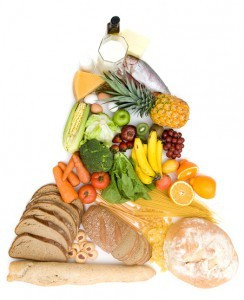
Plant Foods
Vegetables, fruit, legumes, whole grains, nuts, and seeds provide fibre, vitamins, minerals, and a wide range of bioactive compounds. WHO recommends that people older than ten years aim for at least 400 grams of fruit and vegetables per day and at least 25 grams of naturally occurring dietary fibre, with age-appropriate lower amounts for younger children (WHO, 2025). Whole fruits are generally preferable to fruit juice because they provide more fibre and are less concentrated sources of free sugar. Frozen and canned vegetables and fruits can also be nutritious when they are not packed with excessive sodium or added sugar. Beans, lentils, chickpeas, and peas are especially useful because they contribute both carbohydrate and plant protein while increasing fibre intake.
Whole grains are preferable to heavily refined grains because much of the fibre and micronutrient-rich structure remains intact. Oats, brown rice, whole-grain breads, barley, millet, whole wheat, and other culturally familiar grains can all fit a healthy pattern. The American Heart Association’s dietary guidance recommends choosing whole grains and a wide variety of vegetables and fruits rather than focusing on isolated nutrients (Lichtenstein et al., 2021). The practical goal is not perfection at every meal. Replacing some refined grains with whole-grain alternatives and adding vegetables, legumes, or fruit to foods already eaten regularly can improve diet quality without requiring an entirely unfamiliar menu.

Protein and Fat Quality
Protein is needed for muscle, enzymes, hormones, immune function, and tissue repair, but a healthy diet does not require extreme protein intake. Legumes, fish, seafood, eggs, dairy foods, poultry, nuts, seeds, soy foods, and lean unprocessed meats can all contribute protein. The healthiest mix depends on nutritional needs and cultural preference. Greater use of plant proteins can improve fibre intake and may reduce saturated-fat intake when legumes or nuts replace processed or fatty meats. Fish and seafood can provide protein along with omega-3 fats, while dairy foods or fortified alternatives can contribute calcium, protein, and other nutrients.

Dietary fat is essential, and simply choosing “low fat” products does not guarantee a healthy diet. WHO recommends favoring unsaturated fats from foods such as nuts, seeds, fish, avocado, and plant oils over saturated and trans fats (WHO, 2025). Saturated fat should generally remain below 10 percent of total energy and industrially produced trans fat should be avoided. The same principle applies to carbohydrate: carbohydrate is not inherently unhealthy. The difference between lentils, oats, fruit, and sugar-sweetened beverages matters more than whether all are technically sources of carbohydrate. Healthy eating therefore focuses on food quality and overall pattern rather than attempting to eliminate one macronutrient category.
Sugar Sodium and Processing
Free sugars include sugars added during manufacturing or preparation and sugars naturally present in honey, syrups, fruit juices, and concentrates. WHO recommends keeping free sugars below 10 percent of total energy intake, with further reduction providing additional health benefits for many people (WHO, 2025). Sugar-sweetened beverages can contribute large amounts quickly without producing the same satiety as solid food. Sodium is another population-level concern because high intake contributes to elevated blood pressure. WHO recommends keeping sodium below 2 grams per day, equivalent to about 5 grams of salt, although individual medical needs may differ.
Highly processed foods deserve attention because many combine refined starches, sugars, sodium, unhealthy fats, intense flavoring, and high energy density in forms designed for convenience and repeated consumption. A 2024 umbrella review in The BMJ, covering nearly ten million participants across pooled analyses, found that greater exposure to ultra-processed foods was consistently associated with several adverse health outcomes, particularly cardiometabolic disease and mortality, although evidence quality differed across outcomes and much of the evidence was observational (Lane et al., 2024). This does not mean every packaged food is harmful. Frozen vegetables, canned beans, pasteurized milk, whole-grain bread, and other processed foods can be nutritious. The more useful distinction is whether processing creates a convenient form of nutritious food or produces a diet dominated by products high in refined ingredients and low in fibre and nutrient density.
Body weight changes are influenced by energy intake and expenditure, but healthy nutrition is broader than calorie arithmetic. Two diets containing the same calories can differ substantially in fibre, protein, vitamins, minerals, sodium, added sugar, fat quality, and satiety. A diet built mainly from minimally processed foods can make appetite regulation easier because vegetables, fruit, legumes, whole grains, and protein-rich foods often provide greater volume or satiety than energy-dense snack foods. At the same time, people have different energy needs depending on body size, age, pregnancy, physical activity, illness, and goals.
Weight loss is not automatically a suitable objective for every person. Children, adolescents, pregnant people, older adults, athletes, and people recovering from illness may require different priorities. Individuals with diabetes, kidney disease, gastrointestinal disorders, food allergies, eating disorders, or other medical conditions may need individualized guidance. This is one reason universal internet menus are less useful than evidence-based principles that can be adapted. A healthy diet should support physical and psychological wellbeing rather than turn every eating decision into a moral test.
Practical Healthy Eating
The best dietary pattern is one a person can maintain. Planning meals around familiar foods can be more sustainable than following restrictive programs built around expensive products. A simple meal might combine a high-fibre carbohydrate, a protein source, vegetables or fruit, and a source of healthy fat. For example, lentils with brown rice and vegetables, whole-grain bread with eggs and salad, yogurt with oats and fruit, or fish with potatoes and vegetables can all fit healthy patterns. The related Academic Master discussion of healthy foods provides additional examples, but no one cuisine has exclusive ownership of healthy eating.

Shopping and preparation habits can make the pattern easier. Keeping beans, lentils, oats, frozen vegetables, canned fish, eggs, fruit, nuts, and whole grains available reduces dependence on takeout when time is short. Cooking larger portions and using leftovers can save both money and effort. Healthy diets do not have to be built from premium “wellness” products. Many traditional staple foods are nutritionally strong when combined thoughtfully. The major barriers are often not lack of knowledge but food prices, time, work schedules, transport, marketing, cooking facilities, and availability. Public-health guidance therefore increasingly recognizes that healthy eating depends partly on the food environment rather than personal discipline alone.
Water should be the default drink for most people, while unsweetened tea or coffee can fit into many healthy diets. Sugary drinks should be limited because they add free sugar without much nutritional value. Alcohol is not required for health; people who do not drink should not begin for supposed cardiovascular benefit. Tea, coffee, and other beverages can contain useful plant compounds, but they do not compensate for an otherwise poor diet.

Vitamin and mineral supplements can be necessary in specific circumstances, such as folic acid around pregnancy, vitamin B12 for some vegan diets, vitamin D or iron when clinically indicated, or supplementation for documented deficiency. For most healthy people, however, supplements should complement rather than replace varied food intake. Claims that one product “boosts immunity,” detoxifies the body, changes blood pressure rapidly, or guarantees weight loss should be treated cautiously. Nutrition science evaluates patterns and measurable outcomes, while marketing often highlights one ingredient and ignores the rest of the diet.
Eating serves social and cultural purposes as well as biological ones. Family meals, religious traditions, celebrations, regional cuisines, and personal preferences can all be part of healthy eating. The WHO–FAO framework explicitly recognizes that healthy diets vary according to cultural context and locally available foods (WHO & FAO, 2024). This flexibility is important because a dietary pattern that is nutritionally ideal on paper but culturally unacceptable or financially unrealistic will not be sustained.
The strongest approach is therefore to improve the overall pattern gradually. More vegetables, fruit, legumes, whole grains, and minimally processed foods can be added without banning every favorite food. Foods high in sugar, salt, or saturated fat can remain occasional parts of a diet without defining the whole pattern. This reduces the cycle in which rigid restriction is followed by abandonment. Healthy eating is not achieved by making meals joyless; it is achieved when nutritious choices become normal enough that less nutritious choices do not dominate.
Conclusion
A healthy diet is a flexible dietary pattern built around adequacy, balance, moderation, and diversity. Current WHO, FAO, U.S. dietary, and cardiovascular guidance consistently supports eating a wide variety of vegetables, fruits, legumes, whole grains, nuts, seeds, and appropriate protein sources while favoring unsaturated fats and limiting excessive sodium, free sugars, saturated fat, trans fat, and highly processed foods. The quality of carbohydrates and fats matters more than eliminating either group, and calorie balance is important without being the sole measure of diet quality. Healthy eating also needs to account for culture, cost, medical needs, physical activity, and personal preference. Supplements and fashionable diets can sometimes be useful, but they cannot replace a sustainable food pattern. The most practical strategy is not to search for one perfect menu. It is to make repeated choices that increase nutrient-dense foods, reduce foods that contribute large amounts of sugar, sodium, and unhealthy fats, and create meals that are enjoyable enough to continue over the long term.
References
Lane, M. M., Gamage, E., Du, S., et al. (2024). Ultra-processed food exposure and adverse health outcomes: Umbrella review of epidemiological meta-analyses. BMJ, 384, e077310. https://doi.org/10.1136/bmj-2023-077310
Lichtenstein, A. H., Appel, L. J., Vadiveloo, M., et al. (2021). 2021 dietary guidance to improve cardiovascular health: A scientific statement from the American Heart Association. Circulation, 144(23), e472–e487. https://doi.org/10.1161/CIR.0000000000001031
U.S. Department of Health and Human Services & U.S. Department of Agriculture. (2026). Dietary Guidelines for Americans, 2025–2030 (10th ed.).
World Health Organization. (2025). Healthy Diet.
World Health Organization & Food and Agriculture Organization of the United Nations. (2024). What Are Healthy Diets?
Cite This Work
To export a reference to this article please select a referencing stye below:

Academic Master Education Team is a group of academic editors and subject specialists responsible for producing structured, research-backed essays across multiple disciplines. Each article is developed following Academic Master’s Editorial Policy and supported by credible academic references. The team ensures clarity, citation accuracy, and adherence to ethical academic writing standards
Content reviewed under Academic Master Editorial Policy.





