
Abstract
Construction documentation is the information system through which design intent, client requirements, contractual obligations, technical standards, cost assumptions, construction decisions, and final project records are communicated. Drawings and specifications form its most visible components, but successful project delivery also depends on schedules, bills of quantities, submittals, requests for information, meeting minutes, change records, method statements, approvals, estimates, and as-built information. Poor documentation can create ambiguity, rework, delay, disputes, and quality problems even when the underlying design is technically sound. This essay examines the role of construction documentation across design, procurement, construction, change management, communication, quality control, and project closeout. It argues that documents should not merely describe the final building; they should preserve enough of the project’s reasoning, decisions, responsibilities, and changes to support coordinated execution and later operation.
Construction Documents as the Project Information Baseline
The purpose of construction documents is to convert the owner’s requirements and the design team’s solution into information that can be priced, approved, constructed, inspected, and maintained. Architectural, structural, mechanical, electrical, plumbing, civil, and specialist drawings show location, dimensions, relationships, and technical intent, while written specifications define materials, workmanship, performance, quality standards, testing, and execution requirements. The project manual may also contain procurement and contractual information depending on the delivery arrangement.
This documentation creates a common baseline for owner, consultant, contractor, authorities, subcontractors, and suppliers. Without a coordinated baseline, each party may work from a different interpretation of scope. Good documents therefore help manage the relationship among scope, time, cost, and quality by making expected outcomes visible before physical work occurs.
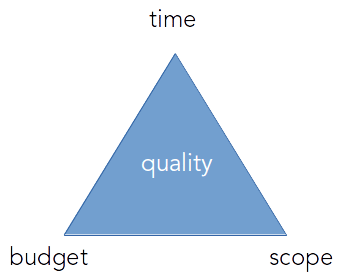
Figure: Relationship among project scope, time, cost, and quality.
Construction documents are also used to obtain permits and approvals, support tendering, compare bids, coordinate subcontractors, inspect work, process payments, and resolve questions. They are therefore not static design products. Their value depends on whether they are complete enough for the project stage, coordinated across disciplines, version-controlled, and accessible to the people who must act on them.
Development from Client Requirements to Issued Documents
Documentation begins before detailed drafting. The owner defines needs, constraints, functional requirements, budget, schedule, operational objectives, and site conditions. Architects, engineers, consultants, project managers, and other specialists progressively translate these requirements through concept design, schematic design, design development, and construction-document stages. The labels and percentages used for these stages vary among organizations, so a “100% document set” should not be assumed to mean that no further clarification or change will ever occur.
As design develops, the drawings should become more coordinated and technically specific. Architectural plans must align with structure and building services; equipment needs space, access, power, and maintenance clearances; penetrations must be coordinated; and material selections must match specifications. This iterative development is one reason quality reviews are essential before documents are issued for tender or construction.
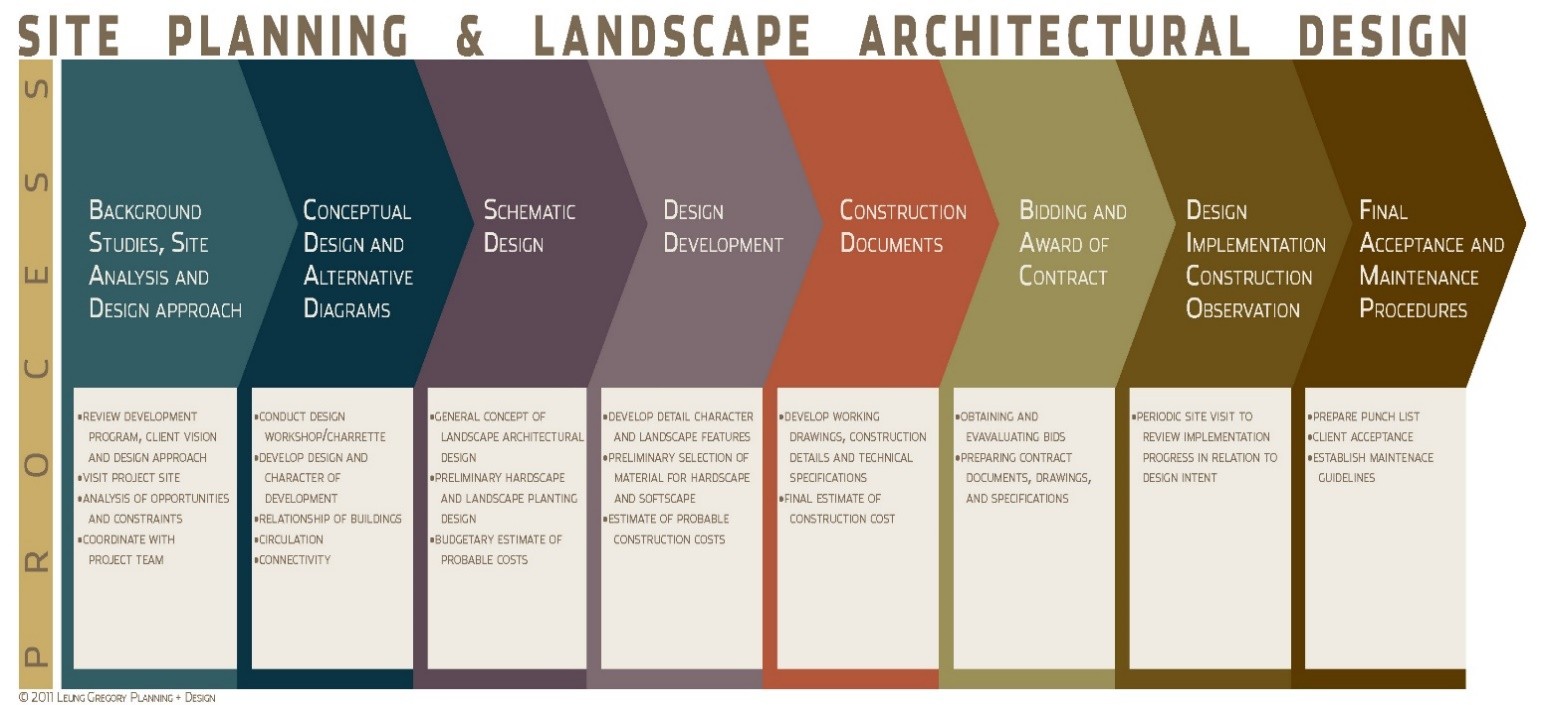
Figure: Typical design-development progression toward construction documentation.
Building Information Modeling and computer-aided design can improve coordination, visualization, quantity extraction, and revision control, but software does not guarantee document quality. A detailed model can still contain incorrect assumptions, unresolved clashes, inconsistent naming, or missing constructability information. The drafting or modeling system must therefore be matched with competent people, agreed standards, review procedures, and clear responsibilities.
Drawings, Specifications, Schedules, and Supporting Records
A construction drawing set may include site and plot plans, floor plans, roof plans, elevations, sections, foundation and framing plans, interior elevations, details, schedules, diagrams, and discipline-specific drawings. The exact composition depends on project type and complexity. Drawings communicate spatial information especially well, but they cannot efficiently contain every requirement. Specifications complement them by describing materials, quality, execution, testing, tolerances, standards, and performance criteria.
Supporting records are equally important because the project cannot be managed through drawings and specifications alone. Bills of quantities, schedules, design reports, cost estimates, scope statements, project charters, risk registers, submittals, method statements, shop drawings, RFIs, meeting minutes, inspection records, and change logs explain how decisions move from design into execution. Their contractual status differs by project and agreement, but operationally they create traceability.
A document tracker can help teams record status, revision, responsible party, submission date, approval date, and distribution. This reduces the risk that a subcontractor constructs from an obsolete drawing or that an unanswered technical query disappears between organizations.
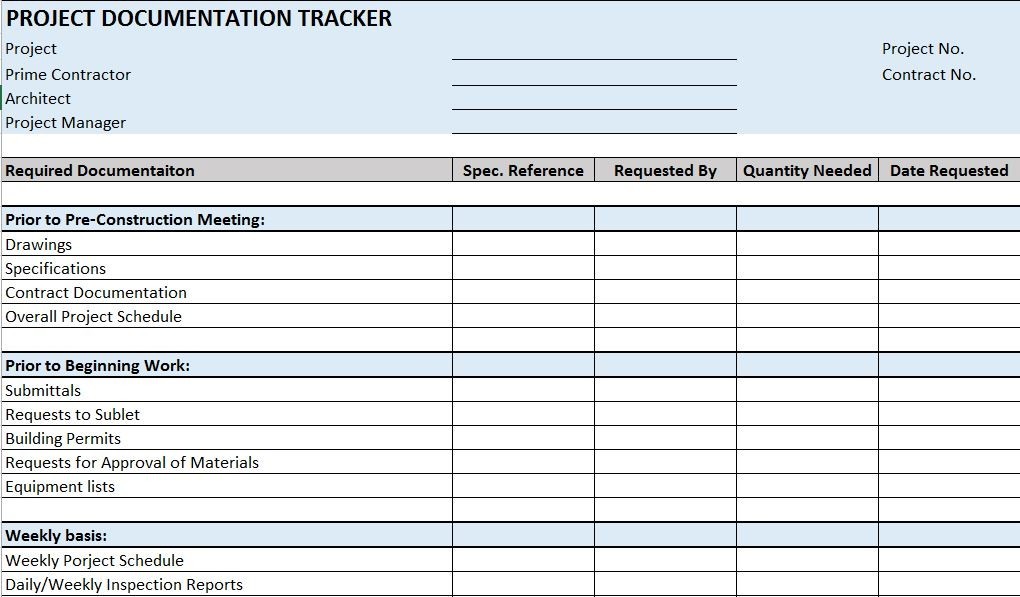
Figure: Example of a construction-document tracking approach.
Issued-for-Construction Information and Change Control
Issued-for-construction drawings represent the set authorized for field use under the project’s document-control process. They should be clearly identified by revision and issue status so the contractor can distinguish them from preliminary, tender, coordination, or superseded documents. The exact legal effect of an IFC set depends on the contract; it should not be described automatically as a “pre-signed agreement” among owner, consultant, and contractor. The contract documents as a whole determine obligations.
Changes remain normal in construction because hidden site conditions, owner decisions, design development, code interpretation, material availability, coordination conflicts, and construction methods can require adjustment. The objective of project management is therefore not to pretend that zero change is always achievable. It is to reduce avoidable changes and ensure that necessary changes are evaluated, approved, priced, scheduled, communicated, and recorded systematically.
Formal mechanisms may include architect’s instructions, supplemental instructions, change orders, bulletins, revised drawings, technical queries, or other contract-defined processes. Every team member should know which communication changes the contract and which communication is merely explanatory. Informal verbal instructions can become costly when the parties later disagree about scope or authorization.
Communication, Decision History, and Information Transfer
Projects are often designed and constructed by different organizations, which creates a risk of information loss at handover points; management systems depend on clear communication, role definition, and coordination across organizational boundaries (Bright & Cortes, 2019). A contractor may understand what is shown on the drawing without understanding why a particular solution was selected. When later conditions force modification, knowledge of the original design intent can help the team choose an alternative that still satisfies the owner’s needs.
For this reason, important decisions should be traceable. Meeting minutes, design decision logs, RFI responses, approved submittals, correspondence, and change records can preserve the reasoning that produced the current design. Not every email should become a permanent contractual record, but key decisions should not depend solely on individual memory.
Documenting communication also supports accountability. If a requirement changes, the record should indicate what changed, why, who authorized it, which documents were affected, and whether cost or schedule changed. This prevents repeated debate over decisions already made and helps new team members understand the project without reconstructing its history from scattered conversations.
Constructability, Materials, Equipment, and Staffing
Construction documents should communicate the final design while also allowing reasonable construction planning. A drawing can be geometrically correct yet difficult to build because it ignores access, sequencing, temporary works, equipment movement, available tolerances, or trade interfaces. Constructability review helps identify these problems before field work makes them expensive.
Material availability is one important constraint. Long-lead equipment, imported finishes, custom components, and volatile supply chains may affect design and schedule. Procurement planning should identify critical lead times early so that substitutions are not made under emergency conditions. If an approved substitution becomes necessary, its impact on performance, appearance, coordination, warranty, and maintenance should be documented.
Construction equipment and temporary methods can also influence permanent work. Cranes, excavation equipment, access platforms, concrete pours, prefabricated assemblies, and staged installation need space and sequence. Method statements and temporary-work documents can communicate these requirements without forcing permanent design drawings to contain every construction procedure.
Staffing is another delivery variable. Complex structural work, intricate architectural finishes, or highly serviced facilities require different mixes of technical capability. Resource planning belongs primarily to project management and contractor planning rather than to the permanent construction drawing set, but key assumptions affecting schedule and method should still be documented in the appropriate management records.
Quality Assurance, Peer Review, and Estimation
Document quality should be checked progressively rather than only immediately before issue. Discipline reviews can verify completeness and compliance with standards, while interdisciplinary reviews identify conflicts among architecture, structure, mechanical systems, electrical systems, and other packages. BIM clash detection may assist this work, but human review remains necessary because not every problem is a geometric clash.
Peer review can examine whether the proposed design solves the client’s requirements, whether details are buildable, whether specifications match drawings, and whether assumptions are documented. The review process should also verify revision control so that comments are incorporated intentionally rather than creating contradictory versions.
Estimates require similar documentation. Early cost and schedule forecasts are based on incomplete information and should therefore record assumptions, exclusions, quantities, rates, escalation, contingency, market conditions, and the level of design maturity. A baseline estimate becomes misleading when teams remember only the final number and forget the assumptions that produced it. Progressive elaboration means estimates should become more precise as information improves, while material changes from the approved baseline should be explained rather than hidden.
Project-management guidance emphasizes tailoring planning and control to project context rather than treating one method as universal. The current PMBOK framework places increasing emphasis on principles, performance domains, value, uncertainty, and adaptation rather than prescribing a single document sequence (Project Management Institute, 2021).
As-Built Records, Closeout, and Facility Use
The value of documentation continues after construction. During the project, field conditions and approved changes may cause the completed facility to differ from the original design set. As-built or record information should capture relevant final conditions according to contract requirements. Accurate records are particularly valuable for hidden services, equipment, maintenance access, fire-safety systems, shutoffs, and later renovation.
Project closeout may include record drawings, operation and maintenance manuals, warranties, test results, commissioning records, spare-parts information, training materials, asset data, and certificates. These documents transfer knowledge from the project team to the people who will operate and maintain the facility. If closeout records are incomplete, the owner may later pay to rediscover information that was available during construction.
Archiving should therefore be designed for retrieval rather than mere storage. Files need consistent naming, metadata, revision status, permissions, backups, and a defined retention policy. A large archive that cannot be searched or trusted provides little operational value.
Digital Documentation and Project Integration
Modern project teams increasingly use common data environments, cloud collaboration, BIM, digital submittals, mobile field tools, and electronic workflows. These systems can shorten distribution time and improve traceability, but they also create governance questions. Teams need rules for access, approval, naming, versioning, cybersecurity, and responsibility for the authoritative record.
Digital tools should support the information needs of the project rather than create documentation simply because software makes it easy. Duplicate data entry, uncontrolled notifications, and excessive document production can hide important information. The best system makes the current approved information easy to find while preserving the history needed for audit and decision-making.
Supply-chain frameworks similarly emphasize process integration, performance measurement, and visibility across organizational boundaries. These principles can support construction procurement where materials, subcontractors, logistics, and information need to remain coordinated throughout delivery (Association for Supply Chain Management, n.d.).
Conclusion
Construction documentation is not merely a set of drawings produced before site work begins. It is the structured information through which client requirements become design, design becomes procurement and construction, construction changes become controlled decisions, and the completed project becomes an operable facility. Drawings and specifications remain central, but their effectiveness depends on supporting records such as estimates, schedules, RFIs, submittals, meeting minutes, change logs, method statements, quality reviews, and closeout information.
Good documentation reduces ambiguity, supports coordination, improves quality control, and gives teams a reliable basis for cost and schedule decisions. It cannot eliminate every project change, nor can software compensate for weak judgment or poor communication. Its real value comes from traceability: the right people can identify the current requirement, understand the reason for important decisions, see who approved changes, and retrieve accurate records later. When document control, peer review, constructability, communication, and archiving are integrated, construction documentation becomes one of the principal tools for managing project risk rather than simply a contractual administrative requirement.
References
Project Management Institute. (2021). A Guide to the Project Management Body of Knowledge (PMBOK Guide) (7th ed.). Project Management Institute. https://www.pmi.org/pmbok-guide-standards/foundational/pmbok-guide
Bright, D. S., & Cortes, A. H. (2019). Principles of Management. OpenStax. https://openstax.org/books/principles-management/pages/1-introduction
Association for Supply Chain Management. (n.d.). SCOR Digital Standard. https://www.ascm.org/corporate-solutions/standards-tools/scor-ds/
Cite This Work
To export a reference to this article please select a referencing stye below:

Academic Master Education Team is a group of academic editors and subject specialists responsible for producing structured, research-backed essays across multiple disciplines. Each article is developed following Academic Master’s Editorial Policy and supported by credible academic references. The team ensures clarity, citation accuracy, and adherence to ethical academic writing standards
Content reviewed under Academic Master Editorial Policy.





