
Abstract
In the fast-evolving landscape of project management, agile methodologies have emerged as a transformative force, enabling organizations to respond swiftly to change and deliver value incrementally. Central to agile practices is a sprint, a time-boxed iteration where cross-functional teams collaboratively work to deliver a potentially shippable product increment. However, the effective measurement of sprint work remains a critical challenge for organizations seeking to optimize their agile processes.
The study’s methodology, which combines semi-structured interviews with meticulous data analysis, ensures a thorough examination of the opinions and experiences of agile practitioners. The results emphasize the complexity of sprint measurement and the need for measurements and KPIs to be varied to include both quantitative and qualitative aspects. The impact of organizational culture and project-specific qualities on metric selection is also highlighted, highlighting the importance of using context awareness as a guiding principle.
The study’s recommendations, which promise improved sprint measurement and a transformative journey toward better project outcomes, empowered teams, and a steadfast commitment to agile principles, serve as a reference point for organizations navigating the agile terrain. It is an approach to begin the journey toward agile excellence, characterized by flexibility, teamwork, and unshakable commitment to ongoing improvement.
Chapter 1 – Introduction
1.0 Background of the Study
In recent years, there has been a significant decline in a product’s life cycle and the time available for promoting new products. As a result, businesses have fewer options to develop creative goods that fulfil client wants while maintaining profitability. As a result, organisations are continuously dealing with changing conditions. However, producing cutting-edge products and services is no easy effort; it needs a success-oriented attitude that is open to new ideas and capable of continual innovation in response to today’s expectations and obstacles. Most organisations strive to do this by embracing innovative solutions to meet these developments. Agile management is one such technique. As defined in the “Agile Manifesto,” Agile development’s basic concepts and objectives have deviated significantly from the traditional, control-centric, and sequential waterfall models utilised in software development procedures (Beck et al., 2001; Cohen et al., 2004). The aim of integrating agile development methodologies with suitable project management techniques is to increase the efficiency and adaptability of software projects while reducing needless administrative activities, requirements, and documentation efforts. Unlike traditional project management methodologies, agile project management provides unparalleled flexibility (Cockburn, 2002).
Furthermore, agile project management methodologies enable continual enhancement throughout the project’s life cycle, resulting in innovations and increased overall client satisfaction. According to recent research, Agile techniques have shown beneficial in increasing customer satisfaction and facilitating flexible change management in software development, especially for projects for the private industry (Lehnen et al., 2016; Stare, 2014). Practitioners first envisioned agile project management as a reaction to continuing economic upheavals that need constant adaptation. It included developing procedures for continual improvements, evolving requirements, and altering goals (Turk et al., 2005). More firms are adopting agile approaches because of the rising realisation of these benefits. Nonetheless, not all businesses can easily apply agile management due to various variables, some of which will be discussed in the literature review.
The notion of a sprint, defined as a set period in which cross-functional teams collaborate to develop a possibly shippable product increment, is critical to the efficacy of agile approaches (Lei et al., 2017). Despite the broad adoption of agile methodologies, many organisations have the issue of effectively monitoring and evaluating sprint work progress. Project managers and teams confront a significant challenge because of the constraints of traditional performance indicators and project management metrics in agile project management. In contrast to traditional waterfall projects, where performance can be measured against a predefined timeline, agile efforts focus on adaptability, flexibility, and delivering value. Consequently, standard metrics may fail to reflect the complexities of agile sprints, such as achieving deadlines and conforming to budget limits. As a result, project stakeholders may struggle to understand the real state and effectiveness of sprint activities, hindering their capacity to make informed decisions and effectively plan future iterations. Also, the quick and fast-paced nature of sprints, which frequently span only two to four weeks, adds to the difficulty of exact performance measurement (Abrahamsson et al., 2017). This condensed timetable leaves little space for full data collecting and analysis. As a result, organisations may fail to manage user event delivery rates, assess team effectiveness, and predict possible sprint concerns. To address these pressing challenges, it is critical to establish and execute effective measurement approaches that are expressly adapted to the agile project management context. Project managers may acquire a more holistic view of sprint progress, product quality and resource utilisation by properly using metrics and key performance indicators (KPIs). This data enables accurate decision-making, continuous development, and improved project outcomes (Rigby and Elder, 2016).
As a result, this project aims to perform a thorough analysis and develop a complete methodology for properly evaluating sprint tasks within the context of an agile project. This research project will identify the most relevant metrics and KPIs for sprint evaluation through a comprehensive examination of the existing literature, interviews with experienced agile practitioners, and analysis of actual data collected from real-world projects. The investigation will also examine the context-dependent aspects that impact metric selection and utilisation, recommending customising measurement approaches to varied project situations. The findings of this study have the potential to influence project management substantially, allowing organisations to realise the promise of agile techniques fully. The conclusions of this study will be useful to project managers, teams, and organisational leaders looking to improve sprint planning, optimise their agile development procedures, and promote effective project delivery. Finally, by bridging the divide between theory and real execution, this project intends to deepen understanding of agile project management, promoting a culture of continual growth inside organisations dedicated to agile principles.
1.1 Problem Statement
The key research subject addressed in this study is the various challenges and complexities connected with proper sprint work evaluation in the context of agile projects. Agile approaches have gained significant acceptance due to their ability to encourage flexibility, adaptation, and rapid product delivery across various sectors. Nonetheless, the intrinsically flexible and cyclical character of sprints creates unique measurement challenges since traditional project management indicators fail to depict the advances and victories of sprint operations fully. In the absence of well-defined measurements and appropriate key performance indicators (KPIs) adapted to the peculiarities of agile projects, analysing team efficiency, detecting bottlenecks, and making informed decisions for process improvement becomes daunting. Organisations cannot adequately evaluate their agile development processes and optimise project efficiency due to a lack of a globally acknowledged standard for evaluating sprint work. As a result, in tackling this research challenge, the study strives to provide a complete framework that provides project managers and teams with the tools they need to measure and analyse sprint activities carefully.
Furthermore, this study digs into the contextual elements that impact the selection and utilisation of metrics, considering project-specific characteristics, team dynamics, and organisational settings. The ultimate goal is to help organisations customise their assessment techniques to the various conditions of their projects, allowing them to reap the full benefits of agile approaches. Finally, this research aims to widen the knowledge of agile project management and create a culture of continuous improvement, allowing organisations to provide excellent products and services quickly.
1.2 Research Aims and Objectives
This research aims to investigate and offer effective methods for assessing sprint effort in agile project contexts. The research aims to promote adopting and progressing agile project management methodologies by addressing the complex problems connected with analysing sprint progress and successes.
The following are the study’s precise objectives:
- Critically assessing the present landscape of research and industry standards concerning the evaluation of sprint work through examination and analysis of the extant body of literature within agile project management, sprint methodologies, and measurement techniques.
- To identify the primary challenges organisations encounter when measuring sprint work in an agile project setting.
- To explore the contextual aspects that affect the choice and use of sprint work assessment metrics, taking project characteristics, team dynamics, and organisational contexts into consideration.
- To formulate an extensive structure for monitoring sprint work in an agile project setting that includes pertinent metrics and KPIs and considers contextual variables.
- To offer pragmatic guidance and thoughtful suggestions to project leaders and their teams, facilitating the proficient execution of the crafted measurement framework.
1.3 Research Questions
To achieve its stated purpose, this thesis addresses the following research questions:
- What essential key performance indicators (KPIs) and critical metrics must be employed to assess sprint work within an agile project environment comprehensively?
- How do various project characteristics, team interactions, and organisational settings impact the selection and application of metrics for measuring sprint performance?
- What fundamental challenges and constraints characterise the methods currently used to evaluate sprint performance, and what techniques may be utilised to go around or around these limitations?
- How can the knowledge acquired from proficient sprint measurement be leveraged to enhance project planning, execution, and, ultimately, the overall achievement of a project?
1.4 Significance of the Research
This study has several implications. This study can improve organisational performance in agile projects by finding and selecting the most relevant and effective metrics and key performance indicators (KPIs) for monitoring sprint activities. With precise insights on sprint progress, project managers and teams can make data-informed decisions to optimise their processes. Project stakeholders benefit from improved resource allocation capabilities, scope modification agility, and project planning precision when equipped with a comprehensive framework for sprint work monitoring, all of which contribute to superior project outcomes, resource utilisation efficiency, and risk mitigation. Furthermore, this research is positioned to establish a culture of continuous improvement among organisations using agile approaches, providing essential insights and suggestions. Teams may use the insights gained from sprint measurement to modify their workflows iteratively, increasing the project’s overall efficiency and success. This research bridges the gap between theoretical principles and actual applications by experimentally testing the suggested framework via case studies, giving tangible proof of its usefulness. In a broader perspective, the value of this study resides in its ability to improve project management protocols, foster an environment of constant improvement, and encourage widespread acceptance and implementation of agile methodologies across varied organisational circumstances. The study findings pave the way for improved project outcomes, reduced business processes, and increased value offerings to stakeholders and end users.
1.5 Thesis Outline
In the subsequent chapters, this thesis will look into several elements of successful sprint measurement within agile project situations. Chapter 2 will summarise the findings, looking into the obstacles and advantages of measuring sprint work. Chapter 3 will methodically explain the study methodology, supporting the selected strategy and outlining the data collection and analysis methods. Chapters 4 and 5 will present the study’s findings, answering research questions and drawing conclusions from qualitative data. Chapter 6 will provide an in-depth evaluation of the research’s consequences, practical advice for project managers and proposals for further research in this sector.
Chapter 2 – Literature Review
2.0 Introduction
Evaluating sprint work outputs is essential for competent project management in agile projects. Agile approaches have gained significant acceptance across various sectors, distinguished by iterative creation and continual delivery. However, the fluidity of sprints and the requirement for agility in project execution provide serious barriers to proper assessment of performance and advancement. This literature review examines current research and established techniques for measuring sprint work in agile project contexts. It will highlight the critical frameworks, metrics, and contextual factors influencing the measuring process.
2.1 Theoretical Framework
This literature analysis begins with examining current concepts related to project management.
2.1.1 Management Theory
Aligning organisational strategy with project endeavours often raises complex conversations in business and management. Organisations are frequently compared to complicated systems, a concept thoroughly examined by Geraldi et al. (2011) in their investigation of how organisations perceive and respond to complexity in project contexts. This viewpoint explains the various experiences observed in project management, depending on the amount of project complexity. In order to deal with complexity, project-oriented firms frequently advocate for standardised procedures (Geraldi et al., 2011). Many respected project management organisations include management theory in their bodies of knowledge in order to develop rigorous standards and encourage process standardisation. According to Kotter (2014), an organisation’s ability to regulate the activities and processes in its environment is a significant indicator of effective change management. However, Kotter (2014) emphasises that, given the increased frequency of change caused by the complexities, interruption, and quick pace of growth in corporate settings, depending only on best practices is insufficient.
Based on management theory, organisations headed by skilled managers can adapt quickly and survive in constant change. A study of new and established firms shows that hierarchical bureaucracy prevails over flexible networking (Kotter, 2014). As an organisation grows, its structural components have increasing control over resources, limiting the network’s quickness, effectiveness, and inventive potential. According to Kotter (2014), successful organisations must create a core management framework with solid procedures and infrastructure, all while keeping the entrepreneurial spirit that characterised their beginning. This integration of network management and transformational leadership ideas offers the framework for strengthening Agile project techniques, enhancing innovative initiatives, building adaptive work teams, empowering associates, and encouraging innovation.
The Theory of Constraints (TOC) concentrates on enhancing systems made up of distinct actions. According to Trojanowska and Dostatni (2017), a core principle of TOC is the targeted identification and prioritisation of issues critical to the system. This technique focuses on finding and eliminating obstacles to system performance to improve system efficiency, which Izmailov et al. (2016) elaborated on. This idea, in particular, has resonance in project management, notably in Agile and Scrum Project Management approaches. In this setting, the Scrum Master’s responsibility includes removing obstacles to collaborative and effective project involvement, addressing difficulties arising from behaviour or culture, and resolving concerns of team dynamics.
2.1.2 Leadership Theory
An examination of leadership theory is required since the position of the Scrum Master in Agile Project Management comprises leadership duties and the elimination of barriers to meeting customer requests. Leadership ability is critical in motivating team members and allocating resources efficiently to fulfil an organisation’s goals. Effective leadership fosters performance characteristics such as innovative thinking and flexibility, as evidenced by studies showing the critical significance of effective leadership for teams and businesses (Crossan & Apaydin, 2009; Yukl, 2008). Leadership theorists divide leadership into three categories: transformational, open-minded, and transactional (Antonakis & House, 2014; Bass, 1985).
Transformational leadership is defined by Antonakis and House (2014) as a proclivity for increased cooperation among team members and leaders, building an atmosphere of mutual support, and developing behaviours conducive to improved performance. Bass (1988) adds to this debate by depicting transformative leaders as motivating, fascinating, and inspiring figures. Scrum Masters, similar to transformational leaders, face the delicate challenge of regulating their inspiration, influence, stimulation, and motivation levels to meet the individual demands of each team member (Srivastava & Jain, 2017). To achieve organisational goals, transactional leaders must give associates monitoring, help, and direction in certain ways. When exposed to a transformational leadership style, team members report increased motivation and a commitment to exceeding goals (Bass, 1988). As a result, Scrum Masters must be adaptable in their use of leadership abilities when managing their teams.
Situational leadership, the ability to modify a person’s leadership style in response to shifting situations, is especially significant in the Scrum Master’s position. This leadership approach is scrutinised via the prism of the Scrum Master’s understanding and adaptability when presented with team demands and unexpected alterations that occur throughout project sprints. A situational leadership model is developed after examining the required leadership involvement based on each team member’s experience and level of maturity (Tortorella & Fogliatto, 2017). The research of Thompson and Glas (2015) digs into the complex interplay between team management practises, productivity, and leadership styles. The study emphasises the importance of influential Scrum Masters quickly adapting and selecting the best leadership technique based on the current situation. The team’s maturity level significantly impacts how task orientation and interpersonal interactions are maintained through the project phase (Thompson & Glas, 2015). The Scrum Master must use leadership and management theories with discernment based on the unique conditions and duties necessary to fulfil the project’s overall goals.
2.1.3 Agile Project Management Theories
Control theory evolves as an effective tool for identifying the unique project circumstances in which Agile approaches are most appropriate. The ever-changing environment of client requirements throughout the project life cycle is an irrefutable truth driven by changing business demands. According to Maruping et al. (2009), project failures characterised by cost overruns, poor quality, or late delivery are heavily ascribed to a team’s inability to adapt to these shifting demands. Extensive research on IT projects demonstrates the crucial role that project management techniques play in defining their performance results (Barki & Hartwick, 2001; Chan & Thong, 2009). Formal control techniques frequently concentrate on performance assessments that focus on output and the alignment of individual behaviours with organisational goals.
In contrast, informal control techniques emphasise a social strategy based on self-regulation and community dynamics to bridge the gap between personal and organisational objectives (Maruping et al., 2009). Informal control methods are divided into two categories: self-control and clan control. Self-control enables team members to set personal goals and participate in monitoring themselves by identifying and carrying out necessary activities (Maruping et al., 2009). Clan control, on the other hand, is based on socialisation inside teams, where members collectively subscribe to the same norms and values espoused by the organisation, frequently via the sharing of experiences, customs, and tales. Agile teams are similar to autonomous teams but must be more flexible in light of the ongoing flux and unpredictability. This puts Scrum Masters in the difficult position of balancing structural aspects with the required flexibility to fulfil client expectations in the face of continual change.
Along with control theory, stakeholder theory is an important component of agile management thought. Stakeholder theory is based on thoroughly understanding stakeholders’ goals, objectives, and targets during a project (Schaltegger et al., 2017). Stakeholders include internal and external persons or entities directly affected by the project’s execution and outcomes. A Scrum Master’s core tasks include promoting stakeholder participation at all organisational levels, identifying stakeholder needs, and continuing efforts to meet these requirements throughout the project (Maak & Pless, 2006). Scrum Masters must consider stakeholders’ varied cultures, interests, needs, and values to achieve these goals. Effective communication is key to mobilising and synchronising all collaborative activities to achieve the project’s common goals (Maak & Pless, 2006). Schaltegger et al. (2017) explain how leaders progress from competence to extraordinary proficiency by exhibiting the capacity to perceive, navigate, and appraise complicated circumstances from many viewpoints that frequently include different and sometimes opposing aims.
A considerable amount of peer-reviewed literature and numerous sources challenge several complaints against the Agile Manifesto principles. Conboy and Fitzgerald (2004) argue that these ideas lack adequate theoretical foundations. Rosenberg and Stephens (2003) also argue that Agile Project Management (APM) methodologies and ideals do not sufficiently address software architectural challenges. Cohen et al. (2004) argue against the notion that APM is better suited to small teams than bigger projects. Furthermore, Veneziano et al. (2014) refute that APM is a panacea for optimal project management. As Fernandez and Fernandez (2008) explain, the increased acceptance of APM is motivated by its ability to optimise cooperation within short implementation cycles and its favourable influence on team relationships. The ability of agile approaches to make work progress visible and shareable increases the chance of success in difficult, interdisciplinary situations (Cao et al., 2009). APM has found value outside of its initial domain of software development, as indicated by Ciric et al. (2018) and Rigby et al. (2016). Product development (Lehnen et al., 2016; Stare, 2014), educational projects (Grimheden, 2013), construction projects (Demir and Theis, 2016), venture capital groups (Sutherland and Altman, 2009), process innovation (Hannola et al., 2013), and project management within libraries (Niemi-Grundstr€om, 2014) and banks (Niclasen and Stoklund, 2016) have all been studied. With evidence indicating that APM fosters organisational adaptability and responsiveness, particularly when compared to the software development industry (Kupper, 2016), the academic discourse on agile methods has expanded to include collaborative research processes and scientific projects. APM has been successfully applied in academia-industry cooperation (Sandberg and Crnkovic, 2017; Santos et al., 2016), instructional contexts (Pope-Ruark, 2017), and the administration of case studies to bridge the research-practice divide (Barroca et al., 2015).
Furthermore, agile methodologies are effective in scenarios involving working with and mentoring PhD students (Hicks and Foster, 2010), developing prototypes for “Action Design” research projects (Keijzer-Broers and de Reuver, 2016), managing large-scale European research projects with geographically dispersed teams (Marchesi et al., 2007), and producing multidisciplinary research reports (Senabre Hidalgo, 2018). Management of research and development labs (Lima et al., 2012), the use of experimental ethnography in workplace contexts (Mara et al., 2013), the implementation of evidence-based projects for behavioural interventions (Hekler et al., 2016), the adaptation of lean software development in the biopharmaceutical industry (DeWit, 2011), and the incorporation of human-centred research practises (Armstrong et al., 2015) are additional applications.
2.1.4 Theoretical Framework Discussion
The previous theoretical research provided various leadership, management, and agile management ideas that act as core notions affecting the execution of project management within an organisation. These theories provide a complete knowledge of the skills and features that identify effective and inspirational leaders, attributes directly relevant to the fundamental qualities anticipated by successful Scrum Masters. Furthermore, various sub-theories, such as the theory of constraints, control theory, and stakeholder theory, have been examined, each explaining different aspects of the Scrum Master’s role in removing impediments to team success while managing stakeholder expectations and ideas. Each theoretical framework provides aspects of a company’s overall project management philosophy. Recognising that the project portfolio is critical to executing organisational strategy, it becomes critical for the company and the Scrum Masters entrusted with strategic project execution to understand management, leadership, and project management concepts thoroughly.
2.2 Conceptual Framework
The proper measurement of sprint activities is critical to effective project management in an agile framework. Agile techniques have transformed project management by encouraging shortened sprints, iterative development, cooperation, and customer focus. Nonetheless, judging performance and growth within these fast-paced, constantly changing environments remains a daunting problem. This conceptual framework aims to dive into the fundamental concepts and principles that enable correct sprint work evaluation within an agile project scenario.
2.2.1 Project Management
The Project Management Institute’s (PMI, 2017a) definition of a project classifies it as a short-term endeavour to develop a one-of-a-kind product or service. Including a specified timetable with precise start and finish dates distinguishes projects from ordinary company activities (Larson & Gray, 2018). Even though they appear to be mundane endeavours, projects inevitably have one or more original and distinctive components. For example, while creating a workplace is not intrinsically remarkable, it has unique characteristics such as design, location, customizability, and resource allocation, making it a different project (Larson & Gray, 2018). By directing the implementation of strategic planning initiatives, projects play a critical role in creating an organisation’s strategic goal (Larson & Gray, 2018).
Project management (PM) is using expertise, abilities, and procedures to carry out project activities to achieve project objectives (PMI, 2017a). As a discipline, PM is not a revolutionary management approach or tool; rather, its central concept is to foster an atmosphere where workers can collaborate to achieve a common goal, completing projects effectively within established deadlines and budget constraints. Humanity has continuously perfected PM practises throughout history, as seen by enormous undertakings such as China’s Great Wall, Rome’s Colosseum, and the Egyptian pyramids (Lei et al., 2017; Seymour & Hussein, 2014). Notably, these achievements required the participation of specialists such as modern engineers, architects, and project managers (Kozak-Holland, 2011). Rudimentary concepts and methods linked with task management have been used since the earliest phases of human endeavour, including planning, construction, and development. Although historical records of these early efforts are scant, the successful completion of multiple complicated projects despite significant risks, uncertainties, and obstacles that may have led to failure attests to their excellent management (Seymour & Hussein, 2014). Given the scope of many ancient undertakings, it is clear that they need large workforces, precise multi-year planning, and stringent monitoring and control methods to fulfil their objectives (Lei et al., 2017). The division of labour became clear as projects progressed, roles were conceptualised, and tasks were defined. By the late 15th century, projects had progressed from haphazard efforts to methodical planning, distinguishing design from execution (Garel, 2013). Project development gained traction as more emphasis was placed on project complexities, scope, economic concerns, and resource management (Garel, 2013). Although a standardised project management framework had not yet been established, these incremental improvements debunked earlier project myths such as unlimited budgets with no returns, excessive forced labour, infinite timelines, and a lack of concepts that would later become integral to established procedures for managing projects (Garel, 2013). Familiarity with several models assists in determining the most appropriate method in the context of interruption and change. As a result, this conceptual analysis will examine two modern project management approaches, namely the Waterfall and agile frameworks.
2.2.1.1 The Waterfall Approach
The Waterfall technique is frequently considered a simple and easy-to-implement project management strategy that can be applied across several domains (Crespo-Santiago & Cosme, 2011). The waterfall technique may be used to manage research efforts efficiently, IT rollouts, process designs and restructuring projects (Crespo-Santiago & Cosme, 2011). Typically, organisations begin their Waterfall journey by completing a feasibility study as the first phase to analyse the cost-benefit ratio and verify the viability of the planned project deliverables. The technique then examines system and functional requirements (Crespo-Santiago & Cosme, 2011; PMI, 2017a). These customer-defined operational requirements are then used to create the structure, product, or service in minute technical detail. After rigorous testing and validation from users and the project team, the project moves on to the development, customisation, or production phase. It ends in delivering the finished product or service. In addition, a maintenance phase may be included to complete the project, allowing for adjustments, troubleshooting, and resolving new requirements (Crespo-Santiago & Cosme, 2011; PMI, 2017a).
The Waterfall project management approach exemplifies the traditional approach to project execution. However, its applicability varies based on the project’s nature. An excellent project description is the foundation for a well-defined roadmap, directing the execution of milestones and project deliverables within the conventional Waterfall technique (Binder et al., 2014). Conventional project management methods emphasise the importance of planning and control, which many organisations see as critical for effective project estimation and preparation. Nonetheless, the human factor is frequently overlooked in such techniques. The Waterfall technique is based on the idea that once the project’s key criteria and objectives are identified, all barriers and uncertainties will be systematically eliminated on the way to the project conclusion (Andrei et al., 2019). However, in practice, customers regularly change their project requirements, prompting the reevaluation of one or more project stages and resulting in cost and schedule revisions (Andrei et al., 2019).
Figure 1 depicts the structure of the Waterfall project management process.
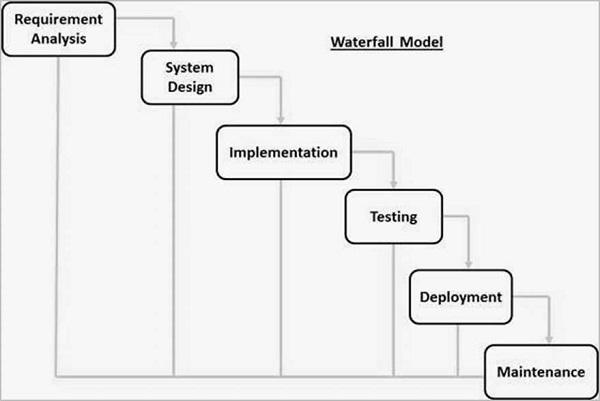
Figure 1. Project Development and Management Using the Waterfall Technique.
While the Waterfall approach is useful in some cases, such as recurring projects or smaller projects with well-defined budgets, timetables, and scope, it also has advantages that should be recognised (Andrei et al., 2019). It promotes team organisation by providing detailed documentation that retains team members’ knowledge and experience and improves the onboarding process for new team members. Furthermore, the specified time of each stage allows for possibilities to optimise the project schedule across its many phases. Furthermore, the Waterfall approach has the advantages of strict adherence to project scope, alignment with stakeholder requirements, budgetary control, efficient time management for all tasks, and comprehensive documentation of all activities and modifications (Crespo-Santiago & Cosme, 2011). The technique produces a more consistent end product or service because of the early design completion and rigorous consideration of all elements. This organised project framework creates a disciplined and efficient procedure for the team. However, it does so at the expense of less flexibility in accepting customer modifications and additions (PMI, 2017a).
Despite its virtues, the Waterfall technique has numerous fundamental flaws and downsides. Its strong emphasis on comprehensive pre-planning is a major shortcoming, making it difficult to adjust or accommodate customer changes without significantly compromising budget and scheduling limitations (Cervone, 2011). In classic project techniques such as Waterfall, the accomplishment or failure of project deliverables during assurance gate assessments determines the project’s state (Andrei et al., 2019; Serrador & Pinto, 2015). While the Waterfall technique optimises time management between project stages, any delay in one job usually impacts succeeding activities because of the method’s intrinsic inflexibility in the face of change, significant revisions, unhappy customers, and the risk of technology developments surpassing project completion (Serrador & Pinto, 2015). According to Serrador and Pinto (2015), detailed planning is critical in defining a project’s quality, and the project is regarded as successful regardless of its profitability or advantages to users or sponsors, provided it complies with the anticipated quality. Notably, the specification formulation phase of a Waterfall project is labour-intensive and time-consuming, raising anticipation before procedure completion or development commencement. This lengthy period reduces resource allocation flexibility and limits the capacity to accept changes (Cervone, 2011).
Furthermore, most features and needs are frequently left unrealised until the project is completed, allowing clients to wait for the final product’s realisation. According to Augustine et al. (2005), 35% of needs are modified throughout a project, and 65% of the features initially stated in the customer’s requirements are either seldom or never used. Such intricacy and dynamism are incompatible with standard project management strategies. Furthermore, Waterfall projects are top-down, requiring management approval before moving on to the next phase. This structure may be difficult in organisations with a bottom-up strategy or where lower levels facilitate change (Crespo-Santiago & Cosme, 2011).
2.2.1.2 The Agile Approach
In recent decades, organisations have begun on the road towards digitalisation and promoting innovative thinking to diversify their services, boost income streams, and improve overall efficiency (Maassen, 2018). The Agile Manifesto arose in 2001 as a response to the changing environment of project management, emphasising the human part of project management. It paved the way for the original agile concepts, initially conceptualised in the late 1950s (Binder et al., 2014). Agile project management methodologies have gained popularity because of the constraints accompanying conventional project planning approaches, which are characterised by considerable upfront preparation. Agile procedures and principles emphasise short-term deliverables while recognising the risks ahead to increase team productivity, enable innovation, and drive progress (Binder et al., 2014).
Projects using Agile techniques are distinguished by a steadfast emphasis on responding to clients’ ever-changing objectives and demands (Maassen, 2018). Agile project management incorporates the essence of continuous development of projects, producing goods or services that accurately reflect the functional requirements consumers and organisations need. This method promotes project completion, which directly influences the most valuable aspects of a firm. Teams interact on several solution components concurrently in an Agile project, often during three to four-week sprint intervals. Each sprint is focused on delivering customer-prioritised updates or products, making each iteration a fully working product in and of itself. The flow of Agile sprints is depicted in Figure 2.
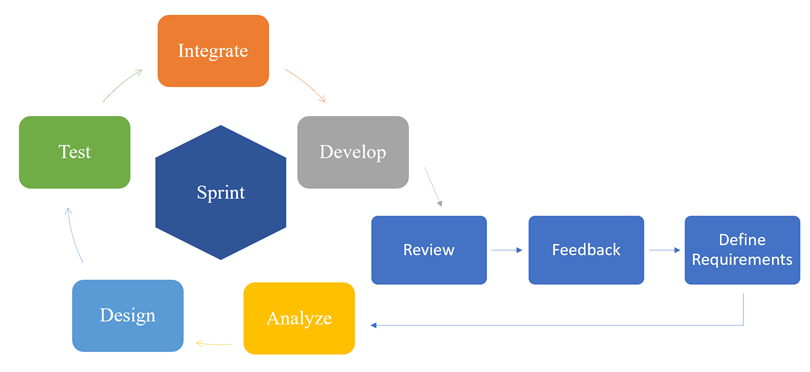
Figure 2. Agile Sprint Flow (Project Management Institute, 2017b)
Projects in today’s landscape usually necessitate creativity and agility to meet ever-changing requirements. This dynamic environment needs a quick and effective reaction to changing requirements, a job that becomes arduous within the limits of a standard waterfall project (Lei et al., 2017). Agile project management approaches, on the other hand, have achieved significant use due to their intrinsic flexibility, which allows for the smooth integration of scope and feature changes (Azanha et al., 2017). Serrador and Pinto (2015) discovered a direct association between Agile methodologies and project success rates, validating the assumption that more widespread use of Agile practices results in improved attainment of project objectives. The academic agreement is that short iteration sprints under Agile project management maximise client value and accelerate project progress (Dingsyr et al., 2012; Novac & Ciochină, 2018). As defined by Papadakis and Tsironis (2018), agility produces an atmosphere capable of quickly adjusting to innovation or new needs, allowing for rapid project alterations. According to Kumar and Shankar (2016), the collaborative culture developed by Agile improves customer and project team contact, resulting in faster delivery and increased consumer knowledge of goods and quality standards. The Agile model emphasising the project director as a facilitator and self-organised project teams, fosters more cohesiveness, excitement, and morale. Furthermore, continuous project planning through sprint iterations reduces risks, and constant client and team communication and evaluation frequently leads to improved client satisfaction (Serrador & Pinto, 2015).
However, the Agile framework, like every technique, has its drawbacks. Due to confrontations with corporate procedures like as information management and procurement, as well as the intrinsic unpredictability and confusion associated with iterative approaches, implementing Agile methodology can be difficult (Boehm & Turner, 2005). Administrative and procedural barriers such as the lack of detailed documentation, which is typically required for training and support, the flexibility for small teams, and the autonomous nature of project teams may limit Agile adoption (Boehm & Turner, 2005). The short-term focus of agile techniques may challenge organisations with long-term ambitions since the flexibility and efficiency necessary for development task identification can often stymie progress towards these goals (Cooper & Sommer, 2018). The Agile approach’s changeable and unpredictable product requirements can further affect judgements regarding whether a project should be included in the company’s growth portfolio (Cooper & Sommer, 2019).
Another disadvantage of the Agile framework is the lack of Key Performance Indicators (KPIs). A plan-based approach in traditional project management approaches allows leadership to assess project progress and importance by monitoring important milestones and budget restrictions. Judging progress exclusively on a timeframe in the Agile framework might be difficult. Senior management must embrace a creative mentality and use new metrics to assess project health and performance, emphasising value production above scheduling adherence (Cooper & Sommer, 2019). Furthermore, without proper management support and skilled leaders, Agile projects can rapidly lose direction and focus (Kumar & Shankar, 2016).
2.3.1 Agile Methodologies
The software sector’s experimental, adaptable, and unique character has made traditional project management methodologies ineffective (Azanha et al., 2017; Cervone, 2011). Agile project management approaches have been increasingly popular because of how quickly and easily they can accommodate client changes (Azanha et al., 2017; Zkan & Mishra, 2019). While there are several versions of Agile project management, the fundamental ideas of the Agile Manifesto are frequently applicable. The importance of partnerships and interactions is emphasised above techniques and procedures, as stated in the manifesto’s first point (Cervone, 2011; Saini et al., 2018). Additionally, providing useful goods and services is more important than creating complicated or in-depth documentation (López-Alcarria et al., 2019; Cervone, 2011). Effective communication between clients and product suppliers via a collaborative link is also necessary (Cervone, 2011; Alcarria et al., 2019).
2.3.1.1 Agile Approaches
Scrum: Scrum agile methodology is widely used in organisations, with roughly 70% of Agile projects using it, making it the most popular and well-known Agile approach (Cervone, 2011; Zkan & Mishra, 2019). According to Hidalgo (2019) and Zada et al. (2015), Scrum is a progressive project management approach emphasising intimate cooperation and interaction. The name “Scrum” comes from rugby, where teams must interact and work together to obtain control of the ball (Azanha et al., 2017). Scrum, in contrast to many Agile approaches connected with software development, is largely a project management strategy rather than a tool for software development (Hohl et al., 2018; Rola et al., 2016). Scrum is built on three pillars: team member roles, process specifications, and user narratives (Cervone, 2011). In most circumstances, a Scrum Master, frequently the team lead or module proprietor, promotes Scrum principles and processes while reducing team development barriers (Hidalgo, 2019). According to Azanha et al. (2017), a Scrum team consists of five to ten networked personnel who organise themselves and work in sprints for one week to a month. In this phase of agile project management, the product owner defines user stories, what needs to be created or built and how every user narrative should be handled during the sprint.
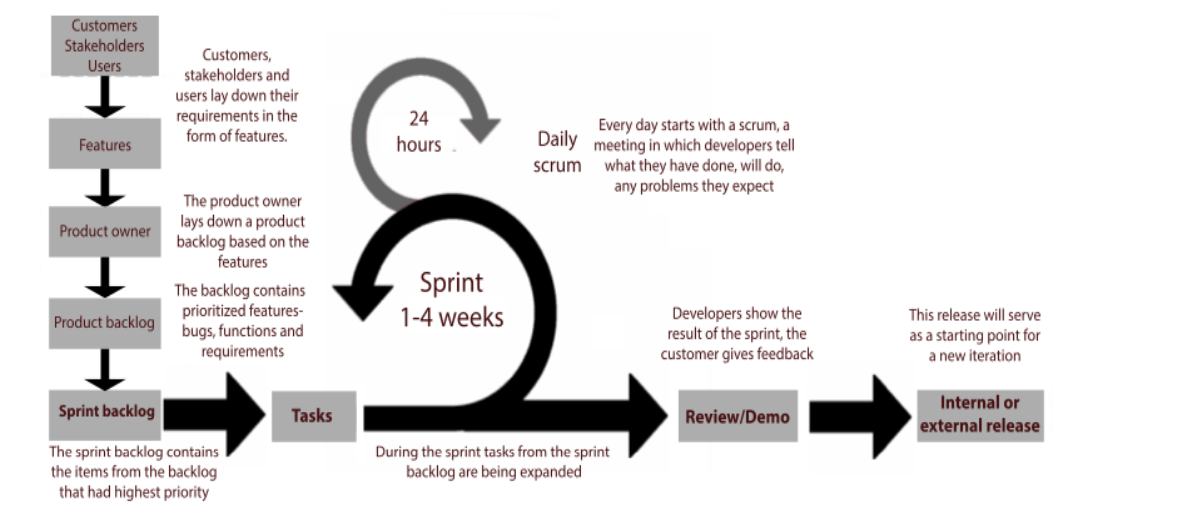
Fig 3: Overview of Scrum, Source: (Gustavsson, 2019)
Kanban: The Kanban approach emphasises the “just-in-time” delivery concept, emphasising work delivery precisely when required (Lei et al., 2017). It does this by painstakingly outlining the needed work and setting exact deadlines, allowing for accurate task prioritisation and a complete process specification. Kanban’s primary principle is visualising work, with duties as cards on a board, either real or virtual (Ahmad et al., 2016). Each card depicts a work item, allowing insight into its current condition and advancement across columns corresponding to successive work-stage stages. This visual management strategy helps to identify bottlenecks, improve communication, and promote a common knowledge of the job (Lei et al., 2017). Kanban’s focus on minimising work in progress (WIP) is one of its distinctive aspects (Kniberg & Skarin, 2020). It limits the maximum number of tasks entered into each column, preventing teams from being overburdened while maintaining an effective workflow. This constraint-driven technique improves productivity while shortening lead times by motivating teams to prioritise completing existing projects over starting new ones.
Furthermore, Kanban has matured to the point where it integrates smoothly with other agile methodologies such as Scrum and Scrumban (Anderson & Bozheva, 2020). This integration enables teams to benefit from both methodologies by combining Scrum’s structured, time-bound iterations with Kanban’s priority for flow and adaptability. As a result, teams may adapt to changing objectives and customer needs using hybrid methodologies while maintaining predictability.
2.3.2 Agile Communication
Effective communication is crucial for project management success, particularly when employing Agile methodologies. Agile has gained significance in project management due to its strong emphasis on adaptation, collaboration, and continuous improvement, which aligns with today’s rapid and flexible corporate landscape. Agile techniques like Scrum and Kanban rely significantly on clear and continuous communication to allow teams to adapt quickly to changing needs. Agile places a high focus on cross-functional teams interacting well. Effective communication allows team members to exchange ideas, analyse progress, and make rapid decisions. Agile teams must be equipped to respond to changes or capture emerging opportunities with well-defined communication channels. As a result, real-time collaboration and communication are important success factors for Agile (Russo, 2021). Teams that keep lines of communication open through a project are more likely to provide outstanding results on time and within budget.
The communication medium used is determined by organisational culture and stakeholders’ viewpoints on the volume of information to be conveyed or delivered. Many organisations use top-to-bottom communication structures and vertical cooperation, similar to the waterfall approach. Vanderslice (1988) observed that this frequently emerges as a command-and-go or leader-follower structure. Conversely, Agile encourages a more horizontal approach to team communication by including numerous stakeholders, such as the project owner, scrum master, project manager, and multi-disciplinary team members, who engage and contribute independently. This open communication allows the team to manage backlogs and generate sprints more effectively (Gustavsson, 2019).
Organisations with close connections have significant control over specified procedures and activities. A project manager typically uses a command-and-go strategy to steer the team, indirectly impacting the team’s output. On the other hand, loosely connected organisations lack some of the features present in tightly coupled ones. Relevant stakeholders convey potential courses of action, but team members reach conclusions through debate and shared efforts (Schilling, 2013). This technique is known as shared leadership, and it promotes shared decision-making procedures that develop a sense of importance and fulfilment in employees, encouraging greater cooperation.
Agile approaches advocate for distributed leadership, in which responsibility is shared among leaders and team members, emphasising everyday conversation activities and relationship-based leadership above other management styles. As a result, a team-centric strategy is increasingly preferred over the more traditional leader-centric one. When considering a cultural transformation, each stakeholder brings their assumptions and points of view to the table (Schein, 2017). For Agile to succeed, a culture of receptivity must exist, reinforced by leaders who understand the need to push change. Simultaneously, team members involved in the process stages must actively participate, provide ideas, and support choices that improve team efficacy. Self-organising teams are beneficial in creating better cooperation since they use less organisational effort and resources (Gustavsson, 2019).
2.3.3 Agile Tools
Agile approaches such as Kanban, Scrum, and Extreme Programming (XP) emphasise the delivery of functional software in short, continuous phases called sprints or iterations. These techniques also emphasise the significance of customer cooperation and adaptability while pushing for teams that are self-organised and adaptive planning—a significant shift from traditional waterfall approaches. Agile approaches complicate project coordination, communication, and monitoring procedures despite their obvious benefits. Agile tools are critical in enabling and simplifying agile practices. Software applications such as Atlassian’s Jira and Trello have recently acquired popularity owing to their effectiveness in improving teamwork and instantaneous communication. These tools enable teams to plan, monitor, and make real-time modifications while providing visual representations of project progress via backlogs, boards, and sprint planning boards (Naseer et al., 2021).
Furthermore, the importance of tools for maintaining test cases, executing tests, and monitoring problems, as demonstrated by solutions such as Zephyr and TestRail, cannot be emphasised. These platforms provide a full software quality perspective throughout the development cycle, effortlessly integrating with agile project management systems (Shereen and Al-Aufi, 2022). DevOps and CI/CD systems such as GitLab CI/CD, Jenkins, and CircleCI automate agile technologies for software development, testing, and deployment. According to agile principles, this automated procedure assures timely and dependable resolution of issues and delivery of new features to end users (Chen and Chen, 2021).
2.3.4 Agile People
The founding concept of the agile manifesto, “People over Process,” emphasises the idea that prioritising humans makes the system more adaptive. Despite its importance, human resource adaptability frequently falls behind other components due to its vulnerability to multiple external factors. Traditional human resource activities include recruiting, developing training programmes matched with present and future goals, and establishing procedures to retain current employees (McMackin & Heffernan, 2020). The traditional HR department, sometimes viewed as bureaucratic and compliance-focused, is undergoing a metamorphosis into a change agent and facilitator of agility. HR has emerged as a vital partner in this paradigm change, providing important assistance to organisations dealing with the problems of a flexible workforce. Agile HR strategies emphasise cross-functional cooperation, quick answers to changing employee demands, and iterative approaches to HR procedures. When fully engaged, the HR department may play a critical role in developing meaningful job positions, descriptions, and remuneration systems that align with business goals. Furthermore, they can help to develop a growth attitude and identify process leaders and areas for improvement (Hesselberg, 2018). The HR department is also well-positioned to assist in tackling team formation difficulties and motivating workers to take ownership of their roles and responsibilities by moving decision-making closer to the team level.
2.4 Literature Gap
While there is a huge amount of literature on agile project management and evaluation, a major gap exists in efficiently quantifying sprint work inside an agile project setting. While several studies have looked at metrics and measurement practises in agile projects, there is a distinct lack of thorough study that covers the unique issues and possibilities connected with quantifying sprint activity. Much existing research focuses on project-level metrics, leaving a significant gap in understanding the complexities and difficulties of assessing sprint activities. These difficulties include documenting progress within time-constrained periods, analysing team effectiveness at the micro-level, and finding bottlenecks specific to sprints.
Furthermore, despite several studies recognising the importance of contextual elements in measurement techniques, a significant knowledge gap persists regarding the impact of contextual variables on the selection and application of KPIs primarily tailored for sprint assessments. Detailed guidance on modifying measuring approaches to fit varied project features, variable team dynamics, and distinct organisational settings is absent. Despite significant technological improvements, the literature provides little insight into the possible application of data analytics and machine learning in sprint assessment. This constitutes a crucial need in the study when investigating how these developing trends and technologies could improve sprint work evaluation’s exactitude, efficiency, and efficacy within agile project contexts.
Addressing these gaps in the literature adds new information and promotes a more thorough grasp of effective measuring approaches for sprint work in agile projects. This endeavour promises to produce useful insights into the metric selection and usage, the complex effect of contextual variables, the empirical evaluation of measuring approaches, and the incorporation of cutting-edge trends and technologies. By bridging these gaps, teams, project managers, and organisations stand to get practical assistance to improve their sprint measurement methods, thus elevating the overall agility and performance of their project development endeavours.
Chapter 3 – Methodology
3.0 Introduction
This chapter describes the methodological technique used to measure sprint work in an agile project setting. The major goal of the research is to get a thorough knowledge of the obstacles and possibilities inherent in sprint work monitoring and identify critical metrics and Key Performance Indicators (KPIs) within the agile project management framework. This study used qualitative research approaches since they allow for an in-depth assessment and analysis of participants’ responses, views, and insights.
The metaphor of the research process as an onion, as upheld by Saunders et al. (2009), provides a useful framework for analysing the numerous steps required in performing an investigation. This method requires that the inquiry begin by peeling away the outside layer of the study onion, which is made up of wider process steps, to gain access to the inner layers. The numerous levels of the research onion serve as a guiding framework for this investigation. The topmost layer of the research onion is concerned with research philosophies, whilst the interior layers are concerned with various research methodologies, strategies, options, timeframes, and processes. The research onion is the middle layer concerns data gathering and interpretation methods.
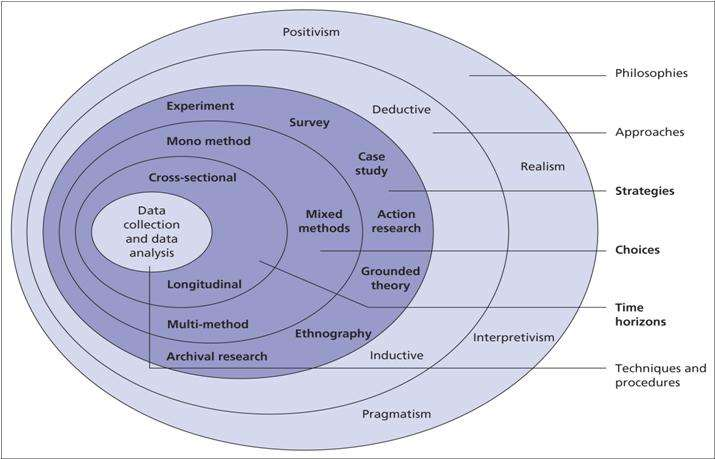
Figure 4. The Research Onion
Certain assumptions must be established to conduct a good research study and get varied outcomes. These assumptions may include numerous aspects of human knowledge, behaviour, reality, influences and experiences. Research demands the adoption of a research philosophy, which essentially defines the researcher’s worldview and informs their approach, methodology, and interpretation of findings. The research philosophy significantly impacts research regarding study design, data collecting, and analytical methodologies. Three basic research philosophies are essential to research: interpretivism, positivism, and pragmatism. As described by Creswell and Creswell (2017) and Denzin and Lincoln (2018), these philosophical viewpoints have significant epistemological, ontological, and axiological implications.
An epistemological philosophy in the context of business research, according to Bell et al. (2019), centres around notions of what is perceptible and what can be grasped, with knowledge serving as its main objective. Furthermore, as Saunders et al. (2016) state, epistemology includes assumptions about knowledge and how it is transmitted to others. In contrast, ontology is a distinct philosophical discipline dealing with hypotheses addressing the nature of reality (Bell et al., 2019). Ontology determines the viewpoints from which organisations and persons are regarded and researched as subjects of study in the context of business and management views (Saunders et al., 2016). Finally, axiology, defined as the study of the nature or substance of values and decisions during the research process (Saunders et al., 2016), is the final categorisation within the spectrum of research philosophies.
Positivism is based on the realistic ontology, which maintains that an objective, external world exists apart from human perception. According to the argument, that reality can be ascertained through empirical observation and measurement (Bryman & Bell, 2019). A positivist epistemology holds that objective knowledge may be attained by systematic observation, measurement, and the use of the scientific method. As Creswell & Creswell (2017) stated, positivist research frequently uses quantitative approaches that strongly emphasise data gathering, hypothesis testing, controlled experiments, and statistical analysis.
The constructivist ontology at the foundation of interpretivism holds that reality is socially and intellectually produced rather than being objective and preexisting. According to Denzin and Lincoln (2018), people give their experiences meaning, creating various subjective realities. Hence, understanding information about a subject is context-dependent and arises from the individual’s subjective interpretations, making interpretivism supportive of an individualised epistemology. In this paradigm, researchers seek to comprehend how individuals build meaning from their experiences (Guba & Lincoln, 1994). Interpretive research is frequently connected with qualitative methodologies. These techniques enable researchers to investigate persons’ subjective experiences, viewpoints, and cultural backgrounds, including interviews, observations, content analysis, and ethnography (Creswell & Creswell, 2017).
The pluralist perspective of pragmatism holds that reality can be divided into objective and subjective components. According to the issue in question and study setting, it accepts that reality’s nature may change (Saunders et al., 2018). The necessity of choosing the best approach to solve a particular research challenge is emphasised by pragmatic epistemology, which is aligned with it. In support of a flexible, problem-driven research approach it appreciates factual facts and subjective interpretations (Creswell & Creswell, 2017). When appropriate, pragmatic researchers will combine both qualitative and quantitative research techniques. With practicality and utility as their top priorities, they choose research methodologies most suited to answer the study questions and objectives (Johnson & Onwuegbuzie, 2004).
This thesis aims to pinpoint issues that develop during sprint work in an agile context. This prompted the choice of the constructionist methodology for this thesis. This will aid in comprehending social phenomena from the inside out. This also connects to epistemology, which is concerned with the theory of knowledge and focuses on discovering the answers to presumptive questions or reality. It is possible to comprehend the participant’s thinking and address the subject with interpretivism, which is linked to constructionism. Interpretivism research would be applied in this study to comprehend the “how, better,” and “why” of the sprint work measuring process. The interpretivism viewpoint aids in understanding the motivations behind the behaviour and supports the study’s objectives (Bell et al., 2015).
3.2 Research Approach
According to Bell et al. (2015), a theory is “a way of explaining observed patterns of associations between phenomena.” Concepts serve as the foundation of theories since they arrange the areas of interest for further inquiry. Many researchers and authors have put forth different research strategies that primarily aid in carrying out the suggested research study. The three main types of research methods that individuals around the globe have used are inductive, deductive, and abductive.
According to Maldonato and Pietrobon (2010), the inductive technique can include user arguments when concluding. The method considers a variety of arguments as facts. It analyses them extensively based on traits, behaviour, and phenomena to derive several conclusions that might aid the research study (Maldonato and Pietrobon, 2010). Inductive research is, by its very nature, exploratory. When little information exists about a given subject and researchers want to develop a thorough understanding through a methodical study of data, this approach is frequently adopted (Bryman & Bell, 2015). Most of the time, inductive research uses qualitative data from interviews, observations, or textual content analysis. These data sources offer detailed, contextualised data that can be applied to developing theories (Eriksson & Kovalainen, 2015). Because inductive research is so adaptable, researchers can change their ideas and research design when new information comes to light (Eriksson & Kovalainen, 2015). Furthermore, inductive inquiry is a potent method for developing novel theories or hypotheses to guide future study and application (Bryman and Bell, 2015). Despite having many strengths with its use, there are some shortcomings and limitations with applying this research approach. Due to the level of analysis needed for inductive research, data gathering and analysis can be time- and resource-consuming (Eriksson & Kovalainen, 2015). The researcher’s subjectivity can influence the interpretation of evidence and the formulation of theories, potentially resulting in bias. Additionally, results from inductive research may be context-specific and difficult to extrapolate to larger populations or situations (Bryman and Bell, 2015).
Establishing a broad framework is important in the deductive research approach, which differs considerably from the inductive technique. The use of pre-existing theories or conceptual frameworks to develop specific hypotheses is at the heart of the deductive research methodology. These theories are based on comprehending the subject matter being investigated (Bryman & Bell, 2015). This procedure ensures that research questions are based on existing knowledge and encourages the methodical investigation of certain links or phenomena. According to Creswell & Creswell (2017), deductive researchers create one or more testable and falsifiable hypotheses. The intended outcomes of the investigation are described in detail by hypotheses, which are statements or predictions. For data gathering and processing, they act as the framework. Measuring variables through controlled surveys, experiments, observations, or secondary data analysis is typical of data collecting in deductive research, which is quantitative (Bryman & Bell, 2015). The study design is frequently regimented to ensure that data are gathered uniformly and consistently. In this method, conclusions are arrived at or taken as true based on arguments that have been examined (Kumar, 2014). The methodology examines universally applicable postulates, theorems, laws, principles, etc. The conclusion’s validity or the facts gathered can be proven using inference, justifications, and assumptions (Kumar, 2014). As it starts with predetermined hypotheses, the deductive technique can be less exploratory than inductive procedures (Bryman & Bell, 2015). It supposes that current theories or conceptual frameworks are reliable and appropriate for the study’s setting and that the research could produce false conclusions if these presumptions are wrong (Creswell & Creswell, 2017).
Inference made through abductive reasoning aims to produce the most compelling justification for a phenomenon seen. According to Magnani (2018), it sits at the nexus of inductive (empirical) and deductive (logical) reasoning. Abductive reasoning, in contrast to deductive reasoning, which begins with broad principles or theories in order to arrive at specific conclusions, and inductive reasoning, which begins with assessments to develop generalised principles or theories, seeks to explain observations or empirical evidence by developing plausible hypotheses or theories (Thagard, 2019). An observation or group of observations that seem perplexing or need explanation is the starting point for abductive reasoning. These findings could be qualitative, quantitative, or a mix of the two. Then, researchers come up with one or more theories or explanations that might explain the phenomenon that was seen. These theories, theories, or conceptual frameworks are frequently the foundations of these hypotheses. The created hypotheses are examined in light of new information or evidence. This could entail conducting additional empirical research, conducting experiments, or assessing the logical consistency of the theories. The most appropriate rationale for the observed occurrences is logical and plausible. This explanation is provisional and open to change as more information becomes available.
The inductive research methodology will be employed for the suggested research study work and will specify how the study’s qualitative research methods will be applied. The strategy will assist in concluding by using the responses from the interview participants as the basic foundation. The method is acknowledged to facilitate easier research study conduct and is thought to be more compatible with the interpretivism philosophy of research. By creating the theory after data collection and analysis, it is possible to compare it to the literature review of the agile project management methodology offered in this study.
3.3 Research Design
The research design is a study’s systematic and planned plan or framework for data gathering and analysis. It includes the general plan and framework of the study, as well as the procedures, methods, and approaches used to collect, process, and evaluate data to answer the study’s questions or objectives (Johnson & Christensen, 2014). Selecting the right research design is not an easy task based on the many types of available designs. The three most prominent research design methods are the quantitative, qualitative, and mixed-method designs.
Quantitative method
The primary characteristics of quantitative research are its reliance on numerical data and the methodical application of standardised data-gathering tools (Creswell & Creswell, 2017). This research method strongly emphasises accuracy, objectivity, and the capacity to extrapolate results to a larger population. In order to collect data in an organised way, quantitative research uses standardised data-gathering tools such as surveys, questionnaires, and experiments (Creswell & Creswell, 2017). This methodically organised methodology improves the validity and repeatability of research. In order to find patterns, trends, and relationships within the data, statistical analysis is crucial in quantitative research (Trochim, 2006). Making conclusions and evaluating hypotheses are made easier using regression analysis, t-tests, and ANOVA. In order to minimise the impact of the researcher’s prejudices on the results, quantitative research strives for impartiality, which ensures that the credibility and rigour of the research are increased by this objectivity (Neuman, 2014). The development of information and advancing evidence-based decision-making are fundamental functions of quantitative research. Its dependence on empirical data enables the attribution of causality, quantification of patterns, and generalisation of results. Quantitative research’s cumulative nature contributes to already-known information in scientific inquiry, resulting in the creation of theories and the improvement of hypotheses. Additionally, using a quantitative approach enables researchers to quickly and extensively investigate challenging research problems. Large datasets produced by tests, surveys, and data mining allow researchers to spot patterns and connections that might not be apparent using only qualitative techniques. This advances comprehension of phenomena and helps make better policy and practice decisions.
There exist some drawbacks to the use of the quantitative method of research. Quantitative study frequently offers a shallow level of comprehension because its emphasis on numerical data could obscure the nuanced subtleties and nuances of complex social processes or human experiences (Creswell & Creswell, 2017). Some facets of study questions might not be fully investigated. The context required to evaluate results from quantitative research adequately is frequently missing. It might not explain the “why” or “how” underlying relationships or trends that have been noticed (Bryman, 2015). Researchers can overlook significant clues about the fundamental mechanisms at work. While surveys and other measurement tools are designed with objectivity, quantitative research strives for objectivity (Polit & Beck, 2017). Analytical tools with a poor design may not accurately reflect participant experiences or fail to capture the subtleties of a phenomenon.
Qualitative method
In qualitative research, the depth and richness of human experiences are explored and understood, frequently in the context of their natural environment (Creswell & Poth, 2017). It aims to respond to research questions by systematically gathering and analysing non-numerical data, such as text, photos, or observations. Instead of producing data that can typically be analysed statistically, as with quantitative research, qualitative research generates narrative or descriptive data that allows researchers to fully understand the varied nature of their inquiry. A key advantage of the qualitative method is that it allows researchers to delve deeper into a subject matter. Researchers can gain detailed, nuanced information that offers a comprehensive grasp of the research issue by using open-ended data-gathering methods like participant observation or interviews. The context of phenomena is a subject that qualitative research excels at examining. It allows researchers to consider contextual aspects that affect the research topic, which is especially useful when examining complicated, context-dependent issues. Qualitative research is also naturally adaptable, enabling an iterative and responsive process. Researchers can modify their data gathering and analysis procedures for discoveries.
There are some limitations to the use of the qualitative research method. For example, qualitative research is frequently criticised for being vulnerable to subjectivity. Biases and viewpoints the researcher holds can affect how qualitative data is interpreted. Subjectivity is reduced through peer debriefing and member checking (Creswell & Creswell, 2017). Smaller sample sizes are frequently used in qualitative research compared to quantitative research. The generalizability of findings to bigger groups is constrained even though this is by design. Qualitative research might take much time. It may be impractical to conduct large-scale investigations since the data collecting and processing procedures may take a lot of time and money. Typically, statistically generalizable conclusions from qualitative research are not produced. Instead, it offers in-depth analyses of certain circumstances or cases (Silverman, 2017).
Mixed-method research
Integrating quantitative and qualitative data gathering and analysis methodologies sets mixed-methods research apart (Creswell & Creswell, 2017). In order to acquire a thorough knowledge of their study questions, researchers using this method gather and evaluate quantitative data, such as survey replies or test results (quantitative), and narrative data, such as interviews or open-ended survey questions (qualitative). Triangulating results from many data sources enables researchers to use mixed-methods research to provide a more thorough knowledge of study problems. While qualitative data can disclose the “why” and “how” underlying these patterns, quantitative data can highlight patterns and trends (Creswell & Creswell, 2017). Mixed-methods research can increase the validity of results by mixing various data kinds. Research conclusions are more solid due to the complementary nature of quantitative and qualitative data (Johnson & Onwuegbuzie, 2004). This practical and adaptable strategy enables researchers to modify their approaches to fit the specific research subject. Depending on the purpose of the study, researchers might opt to place more emphasis on quantitative or qualitative components (Tashakkori & Teddlie, 2003).
Mixed-approaches research can be challenging and requires knowledge of quantitative and qualitative research methods. Data collection, analysis, and integration must all be properly planned by researchers using the mixed method design (Creswell & Creswell, 2017).
Justification of using the qualitative method in this study
For this study, a qualitative approach was chosen to gather perceptions and understandings of how agile environment workers and project managers effectively use agile approaches to track their sprint work and be productive. According to Creswell (2014) and Hood (2015), qualitative inquiry is widely employed to examine social issues through actual events and unstructured behaviour. According to Köhler et al. (2018), one of the main advantages of this research method is the diversity of qualitative approaches, which enables the use of a wide range of data and materials, including images, audio clips, and physical objects, as well as how the information is interpreted and coded. Qualitative methodologies are flexible, allowing the researcher to choose the best methods for collecting data, samples, and study topics (Denzin & Lincoln, 2018). Effective strategies for adapting the design process to the data are provided by qualitative research.
The complexity and complexity of quantifying sprint work within agile project contexts led to the selection of a qualitative research approach for this study. According to Creswell and Poth (2017), qualitative research is especially well-suited for examining complex phenomena in their natural settings. Diverse stakeholder perspectives, developing best practices, and context-specific difficulties define the field of agile project management. A way to delve deeper into these complexity and nuances is through qualitative approaches. Recent project management research emphasizes the value of qualitative research in comprehending the subtleties of agile processes. According to Turner et al. (2019), qualitative research can offer insightful knowledge on the social and cultural facets of agile project management that are essential to the project’s success. This aligns with the rationale for a qualitative approach in this study as the researcher seeks to understand the technical aspects and the social and contextual factors that influence sprint measurement.
3.4 Data Collection
The main strategy for gathering data will be semi-structured interviews. Participants will be chosen through purposive sampling to ensure representation from different organizational positions and degrees of experience in agile project management. For consistency while allowing for freedom to explore new ideas, an interview guide (see Appendix A) will be used (Smith, 2015). Open-ended interview questions were used to collect personal information since they allowed participants to discuss their encounters with the researcher. This strategy may help in significant discoveries and encourage real outcomes (Yin, 2018). Participant interviews will make use of open-ended questions. Using personal stories and a variety of storytelling techniques, this technique enables debate and explanation of the situation through the eyes of the individual team members and project managers. According to Cunningham et al. (2017), interviews allow study participants to share a personal narrative and express how they interpret the situation. Semi-structured interview questions were developed to highlight the subjects covered and to provide participants with the freedom to go off-topic to elaborate on a concept or response, leading to further understanding or clarification of crucial ideas (Gill et al., 2018). Prior to the formation of a theory, well-structured questions can offer a framework for comprehending the phenomenon being studied (Silverman, 2014). According to Silverman (2014), the researcher should be aware of participants’ body language, make eye contact, and actively draw links between earlier ideas and present debates. Finally, Patton (2015) asserted that conducting interviews across cultures has extra difficulties pertinent to the study’s subject.
The interviews were conducted through the use of Zoom. This is due to the proximity between the researcher and the participants. The researcher transcribed the audio recordings of each meeting (find the transcriptions in Appendix B). As it can be repeated as often as necessary to capture specific aspects of the interviewee’s reflections and experiences, the ability to record the participants’ comments verbatim promotes data integrity (Chandler et al., 2015). The researcher kept track of all notes, recordings, and transcriptions on a laptop computer.
3.4.1 Population and Sampling
Ideally, every member of the global’s agile master communities (Scrum in particular) and every employee who works in a sprint setting would be considered. This strategy, meanwhile, is neither practical nor essential for reaching data saturation. To generalize findings across the entire community, researchers frequently sample the population. Scrum masters and project team members from some target organizations were selected for this study’s sample group to collect their varied perspectives and experiences on measuring sprint work and engaging in activities that impact productivity. A sufficient sample size was maintained to guarantee that the study’s findings were pertinent to this demographic. According to Padgett (2012), the decision for sampling must be influenced by the study questions and desired goals, focusing on choosing individuals who can supply the necessary information. Additionally, qualitative sampling is used for speculative and scholarly purposes rather than to represent the entire population (Padgett, 2012). The population size, sampling method, sampling frame, and participant eligibility requirements are the key factors affecting choosing the population used in this study.
Enarson et al. (2004) emphasized the importance of a meticulous selection process for the study sample. In order to ensure a comprehensive representation of participants with diverse perspectives and varying levels of experience, the researchers intentionally recruited a heterogeneous group. This group encompassed individuals from different roles within the IT sector, including scrum masters, agile workers, and remote team members with varying degrees of experience and educational backgrounds in Agile methodologies. Interviews were conducted with Agile teams in both the United Kingdom and Nigeria to gather data on how scrum masters engage with team members who are geographically distant. The study focused on a specific group of participants: scrum masters and agile employees working exclusively in agile settings, communicating in English, and managing teams across different locations. Meanwhile, the remote team members under investigation were defined as agile team members communicating in English. The respondents were chosen through purposeful sampling based on their experience managing agile software development projects. The goal was to have 8 to 10 people represent diverse perspectives. The interviewees are shown in table 1. To maintain anonymity, all interviewees’ names have been changed with numbers.
| Interviewee | Role | Where |
| Participant 1 | Web Developer | Zoom |
| Participant 2 | Product Designer | Zoom |
| Participant 3 | Project Manager | Zoom |
| Participant 4 | Scrum Master | Zoom |
| Participant 5 | Scrum Master | Zoom |
| Participant 6 | Project Manager | Zoom |
| Participant 7 | Scrum Master | Zoom |
| Participant 8 | IT Manager/ Product Manager | Zoom |
Table 1. Demographic of participants
3.5 Data Analysis
Pre-Interview phase
Finding relevant themes and phrases that clarify the research challenge requires choosing the appropriate sample size (Creswell & Poth, 2018). The sample size should be carefully chosen to produce a study population that closely resembles the intended population’s essential characteristics while also being sizable enough to lessen the impact of chance fluctuations and adequately represent all relevant population subsections (Enarson et al., 2004). Van Rijnsoever (2017) underlined that when establishing the saturation sample size, qualitative researchers typically forego probability sampling to select information-rich examples that may successfully answer their research questions. However, estimating the necessary sample size to reach saturation continues to be difficult. Many academics, including Malterud et al. (2016), Marshall et al. (2013), and Van Rijnsoever (2017), have agreed that the minimum sample size for qualitative research considerably falls below the threshold of 50. Even smaller sample sizes, maybe as little as twelve people, may be sufficient for groups showing commonalities to reach saturation (Malterud et al., 2016; Roland, 2016). Due to this, the researcher only conducted interviews with 8 experienced participants in the IT industry to reach data saturation for the study.
Interview Phase
During the interview phase, gathering data involved several steps, commencing with the initial acquisition of information through handwritten notes. These handwritten notes were later transcribed into a digital format using Microsoft Word while also using a combination of both written and visual or audio recordings. It is important to recognize that the inability to conduct face-to-face interviews due to logistical constraints necessitated the consent of participants for interview sessions to be recorded via Zoom. Chandler et al. (2015) have emphasized the significance of employing audio and visual recordings to facilitate the analytical process, primarily because they enable an exact transcription of both spoken words and nonverbal cues, thereby ensuring the preservation of data integrity. The researcher meticulously transcribed all recorded material to capture comprehensive detail. This commitment to accurately reflecting the participants’ genuine expressions and language choices enhances the ability to detect subtle nuances in demeanour, word choices, and body language. It allows the researcher to document personal interview observations and perceptions (Chandler et al., 2015). It is crucial to underscore that all recorded data were securely stored on the researcher’s laptop and were not incorporated into the research findings to protect the anonymity of the participants. Subsequently, the entire dataset was input into NVivo, a qualitative data analysis software, to streamline the organization, analysis, and extraction of insights from the unstructured interview data.
Post-Interview Phase
This study’s data analysis procedure was developed recurrently rather than sequentially. Beginning with a thorough review of the prior literature, it set out to identify any new themes or patterns that had emerged from the conducted interviews. The researcher created potential conversation points and responses relevant to the current study inquiries thanks to the qualitative assessment of the literature that served as a foundation. The literature was also thoroughly examined to confirm and support the themes that emerged throughout the data analysis stage. The current study employs NVivo software as a reliable means to systematically organize, tag, and oversee the extensive dataset. The transcripted interviews undergo a meticulous review, during which content is methodically partitioned into discrete codes, drawing attention to recurring vocabulary, interpersonal dynamics, and unique case studies. Subsequently, the researcher identifies overarching themes that emerge from amalgamating two or more codes, firmly anchoring these themes to the pertinent textual excerpts, per Saldaña’s (2016) methodology. As a culminating step in this intricate analytical process, the sub-categories are subjected to a reconciliation process, ultimately culminating in presenting the final analysis and its corresponding results in alignment with the methodology described by Feng and Behar-Horenstein (2019). This judicious approach underscores the importance of NVivo as a versatile and indispensable tool in the hands of a dedicated researcher, facilitating the extraction of meaningful insights from a trove of qualitative data.
While gathering data, the researcher embarked on a meticulous coding process, foreseeing themes relevant to leadership, management, and project management theories. Concurrently, the researcher remained vigilant for any unforeseen themes or emerging trends. This thorough approach was complemented by NVivo, a comprehensive tool designed to offer a structured framework for data storage, streamlining the complex task of data analysis and management (Feng & Behar-Horenstein, 2019). Subsequently, the themes that emerged from the interconnection of the collected data underwent a rigorous review. This evaluation aimed to ascertain whether these themes held the key to addressing the research inquiries centred around unveiling the specific attributes and competencies that underpin the successful engagement of remote Agile team members.
3.6 Reliability and Validity
Creswell and Poth (2018) promote an effective qualitative research approach, highlighting authenticity’s critical significance in academic pursuits. They argue that the work of a qualitative scholar should go through a thorough process that includes in-depth fieldwork, the incorporation of many data sources, lively conversations, and meticulous analysis. This multidimensional strategy aims to persuade and effectively engage the audience with the thoughts and conclusions of the investigation.
Reliability in research emphasizes the study’s comprehensiveness, especially in light of the methodological choice and the rigorous planning and execution that went into it (Rose & Johnson, 2020). The findings of Rose and Johnson (2020) continue to underline that a clear justification for the research technique and a thorough description of the analytical methodologies used strengthens the dependability of the research. Reliability’s fundamental components focus on the standards of accuracy and consistency preserved throughout the research process, improving the likelihood that other researchers will understand the study and be able to use the research methodology as described (Creswell & Poth, 2018). To achieve the objectives of this study, the researcher took a conscientious approach. Each interview question was articulated verbally to the participants. This deliberate choice aimed to ensure uniformity in the interview process and minimize variations in participant responses, thereby enhancing the overall consistency of the data collection process. Moreover, a meticulous transcription of the interviews was carried out. Each participant was graciously provided with a copy of their respective transcripts. This step was undertaken to offer transparency and accountability in the research process, allowing all participants to review and validate the accuracy of their recorded responses before proceeding to the data analysis phase. A set of measures were implemented further to bolster the reliability of the study’s findings. Firstly, all participants were posed with the same questions, eliminating any potential bias or variation in inquiry. Additionally, the roles of each participant and the researcher were clearly defined and communicated, fostering an environment of mutual understanding and cooperation in this study. The researcher carefully created an interview guide that served as the common framework for all interview sessions to maintain uniformity across interviewees. This deliberate strategy required following a semi-structured narrative that included carefully thought-out follow-up inquiries. These follow-ups were purposefully planned to enable a deeper investigation of the topic, creating meaningful conversation and extracting in-depth information and detailed details during the interview process.
The idea of validity plays a crucial role in qualitative research, denoting the thorough scrutiny used to assure the accuracy and veracity of the findings. This assessment depends on several factors, including the researcher’s viewpoints, study participants’ feedback, and the critical eyes of those using the research findings (Rose & Johnson, 2020). The researcher chose a minimum sample size of 8 participants from various agile environments in the IT industry to promote accuracy and objectivity. Interviews with at least 3 Scrum Masters and 5 members of remote teams continued until no new themes or perceptions could be identified with more responses. By the time the data had reached the saturation point, it had depth and detail based on the perceptions and experiences of the study participants. Additionally, the data were triangulated, enhancing result validity by including interviewees from several departments and functional areas throughout the firm.
3.7 Ethical Consideration
An important ethical factor in this qualitative investigation on sprint assessment was informed consent. Before beginning interviews or data collecting, it is crucial to give participants clear and thorough information about the study’s objective, procedures, potential dangers, and benefits. The researcher ensured that participants were given comprehensive information regarding the study’s goals and the scope of their participation. All participants provided written consent and were informed that their information was confidential.
Another moral requirement is to protect participants’ anonymity and privacy. In the context of this study, this meant utilizing participant pseudonyms or identities, making sure no personally identifiable information was given, and securely storing data. The researcher informed participants that their answers would be collected and anonymised, making it impossible to link any particular statement to a single person.
Reflexivity on the part of the researcher is necessary for ethical qualitative research, and this reflexivity entails recognising and correcting any potential biases, values, and preconceptions that the researcher may bring to the study. The researcher was aware of how their background and experiences might have affected the data collection and interpretation in this study on sprint measurement; hence, the researcher did a self-reflection and shared opinions with colleagues to lessen potential prejudice. This made it possible to approach the investigation more objectively and sensitively to different viewpoints.
CHAPTER 4 – RESULTS AND FINDINGS
4.0 Introduction
The results of a qualitative study are presented and extensively discussed in this section to increase the efficacy of sprint work measurement within agile project environments. This study dives into the viewpoints and practical wisdom of a wide range of participants who have had to contend with the complexities of sprint measurement in their particular organizational contexts. The cornerstone of this research is the qualitative data acquired from semi-structured interviews, which provides an extensive array of ideas and viewpoints on the difficulties, solutions, and results of sprint work assessment. In order to guarantee participant confidentiality and the integrity of the research, this investigation is based on a commitment to ethical research principles.
The study’s findings will be reported in the following sections, together with important themes that came to light during the data analysis. These themes provided insight into various sprint measurement topics, including the choice and use of metrics, the role of contextual factors, the difficulties encountered, and the possible effects of effective measurement on project planning and execution. These findings will be critically examined in the discussion that follows in the next chapter, which will give you a better grasp of their ramifications and usefulness in real-world situations. The discussion following the analysis of the findings will add to the knowledge already available on agile project management and provide practitioners, project managers, and organizational leaders with useful advice on improving their sprint measurement procedures.
The research questions of interest, as analysed in Chapter 1, are as follows.
- What essential key performance indicators (KPIs) and critical metrics must be employed to assess sprint work within an agile project environment comprehensively?
- How do various project characteristics, team interactions, and organizational settings impact the selection and application of metrics for measuring sprint performance?
- What fundamental challenges and constraints characterize the methods currently used to evaluate sprint performance, and what techniques may be utilized to overcome these limitations?
- How can the knowledge acquired from proficient sprint measurement be leveraged to enhance project planning, execution, and, ultimately, the overall achievement of a project?
4.1 Thematic Analysis
With the help of Nvivo, themes were generated for each research question, which helped extensively and comprehensively answer the research questions and efficiently fulfil the project’s objectives. The table below shows the thematic analysis obtained for a clear understanding.
Table 2: Thematic Analysis
The word cloud obtained from the interview is indicated in the figure below, highlighting the frequency at which the participants spoke words, which is important for the analysis process.
Figure 5. Word Cloud
RQ1: Essential KPIs and Critical Metrics for Sprint Assessment
The challenges associated with developing key performance indicators for effectively tracking sprint work are specific to this research question. The key themes extracted for this objective are discussed below.
Metrics Selection and Impact
Velocity point track
Metric selection is an essential component of project management in an agile environment. It immediately affects the team’s capacity to provide value, adjust to shifting conditions, and continually enhance operations. The information provided by many participants clarified the significance of certain metrics in an agile context. For example, Participant 1 identified using velocity metrics as a point-tracking metric in measuring sprint work in her organization. She stated,
“Basically, it’s just points and then if you finish all the points assigned to you, that means you finish the work for the sprint.” (Participant 1)
Her submission indicates that agile teams frequently use points as a metric to track and estimate the amount of work performed within a sprint. This number is significant since it clearly indicates how far along a sprint is. Teams can use it to determine whether they are on pace to fulfil their commitments and how much work they can realistically complete. Also, from the participant’s submission, a simple and direct metric for success is to finish the sprint with all the points, which assists teams in establishing attainable goals and evaluating their progress. The choice of points is also based on the time taken to complete each task, in which 1 is allocated for a half day of work, 2 for a full day and so on. This is confirmed by Participant 1 below.
“Talking about the values of points, a point five is given for a very minimal task, point one for a job that will take you like half a day, then the point of two for a job that will take you about a day, point three for a job that will take a day and a half and point four for a job that will take two days and so on. Ideally, the maximum number of points per job on my team base, minus rare occassions is about eight or ten points” (Participant 1)
The Sprint planning is made easier by this method of assessing velocity. Sprints might occasionally have different lengths, for instance, because of statutory vacations. For example, as explained further by Participant 1,
“…So, there’s like a velocity dashboard that sort of ranks everybody based on how much work they have done across some sprints. The dashboard is like a moment of truth to know if you’re meeting the points. Although, the times when you don’t meet is maybe for instance, you are sick couldn’t complete your points. But, if you’re not sick permit or leave you may be asked questions during the Sprint Retrospective. Questions like, what went wrong? Was the task too much? Or was the task miss pointed? Sometimes, they make mistake and assign more than one point to a job.”
By multiplying the velocity metric by the number of working days in a sprint, it is simple to determine how many user story points a development team can complete within a sprint. This simplifies sprint planning. Furthermore, because the metric considers the various sprint lengths, it makes it easier to compare teams and the velocity metric is seen using the velocity dashboard. The velocity dashboard is crucial for tracking accomplishments concerning sprint and point commitments. It is a live gauge of the team’s progress toward its objectives. This measure is crucial for spotting problems early and adjusting to ensure successful sprints. According to one of the participants,
“We also use velocity to measure the amount of work a team can complete in a sprint. This velocity also helps us in estimating how much work can be accomplished in future sprints” (Participant 6)
Burndown charts
Burndown charts metrics are another identified form of metrics from the interview. As indicated by Participant 8, the team’s strategy for the following sprint can be influenced by the lessons learned during retrospectives, a crucial agile procedure. During retrospectives, burndown charts are a crucial source of information for teams to determine what went well and what requires improvement. Participant 8 shared the following:
“…basically, what the burn down chart measures are the rate at which the stories get resolved over time, during the duration of a sprint. Ideally a burn down chart should flow this way. Imagine from the top left to the bottom right. That’s how it should work but that’s an ideal scenario. In reality what you have is more of a square wave going on. When that has been done then you have enough impetus to go into your sprint planning. Some of the learnings you’ve made from the retrospective informs the way you plan the next sprint, informs the sort of stories you pull in.” (Participant 8)
Burndown charts show the status of the work during a sprint visually. Quickly determining whether the team is on track to complete the scheduled work is possible for team members, stakeholders, and product owners (Participants 3 and 8). Using these charts, Teams can spot deviations from the desired path (the top left to bottom right). The team’s pace may fluctuate in the actual world, where variances are frequent and square wave patterns may appear. From the submission of Participant 8, early detection of these issues through burn-down charts enables teams to resolve problems quickly. Burndown charts make project progress visible to all stakeholders, aligning with the agile transparency ideal. By enabling teams to make judgments and adjustments based on data, they also promote the inspect and adapt tenet.
Feedbacks
Customer feedback is a crucial measure that shows whether the team is providing end users with value. It supports the agile notion of using customer satisfaction as a gauge of progress and validates the team’s work. Teams have this metric when they work in brief iterations, i.e. sprints. When it comes to achieving project success, participant 3 gave this practice a high priority. He gave several justifications for this. As the primary justification for using iterative development, feedback must come first. His team can develop a product that aligns more with client needs by releasing in short versions and getting early feedback.
“After that, we have our sprint review where we call the standard stakeholders that are not in the Scrum team to come and check what we are able to deliver during the course of the sprint. We take feedbacks from them and make sure we adapt the feedback. Also, if there are any changes from the stakeholders, we fix it and implement it. We also make sure that we give our product to the best of our customers and users.” (Participant 3)
Participant 3 further underlines the importance of favourable client feedback as a key performance indicator (KPI). This emphasizes the significance of consumer satisfaction as a key agile success metric. User feedback analysis, customer satisfaction surveys, and Net Promoter Score (NPS) are examples of customer feedback metrics as stated by the participant.
“For the key performance indicator, if we are not getting positive feedback from the customer, then we are not doing well and before we roll out any product, we make sure that we set success metrics. What I mean by success metrics is that we want to roll out this product. One of this success metrics is that within a year, we must have at least a 4.5 rating on Play Store.” (Participant 3)
These indicators directly reflect the product’s value to the end customers and steer ongoing development initiatives.
RQ2: Impact of Project Characteristics, Team Interactions, and Organizational Settings
Influence of Work Days and Complexity
Participants 1, 2, 4, 5 and 8 insights emphasize the significant influence of two key factors in agile project management: the number of workdays available and the complexity of the work. These factors shape how work is planned, estimated, and executed within an agile team.
Participant 1 pointed out that a project attribute affecting the metrics used to “point” jobs is the allocated number of days available to work in a sprint, normally around 10 days in a two-week sprint. This shows that the timing of projects and the sprint length impact how work is estimated and tracked. Due to the sprint’s shorter duration, more accurate estimation and tracking may be necessary.
“I’ll say the number of days available to work, because each sprint is about two weeks. So technically you have just like 10 days in a sprint. So, the number of days to work and the complexity of the work are the two things that influence the metrics used to point jobs.” (Participant 1)
From the above submission, the team’s ability to finish tasks during a sprint is directly impacted by the number of working days in that period. Shorter sprints—one or two weeks—offer less time to complete tasks and could call for more exact planning and time management. Retrospective meetings also included statements from the interviewees. As a result, this study validates retrospective protocols and discovers that the impact of shorter sprints kept the workload up but not sustained. This leads to the conclusion that to establish what can be accomplished in a given amount of time, and teams must evaluate the complexity and size of tasks with the available time.
Influence of Project Characteristics
Participant 4 points out that selecting metrics for research-driven projects could give preference to experimentation and innovation. This suggests that the project’s nature, particularly its emphasis on research and innovation, influences the measures chosen.
“For instance, if my organization is working on a research-driven project, we might prioritize and consider metrics related to experimentation and innovation….” (Participant 4)
Metrics about experimentation success, the adoption of novel solutions, or ground-breaking discoveries may be more pertinent in such undertakings. In contrast, compliance and security metrics are highlighted as being of the utmost importance in highly regulated organizations. This implies that the legal environment significantly influences the choice of metrics and the necessity to follow certain standards and security processes. In these situations, regulatory compliance, data security, and risk reduction metrics are essential.
Furthermore, Participant 8 made some assertions on this factor. The statement, “I think when I worked with Kanban, it was because the nature of the project we were working on at the time was not suitable for Scrum, essentially,” suggests that project characteristics strongly influence the choice of agile methodology (Scrum or Kanban) and consequently, how sprint work is conducted. This submission by Participant 8 shows that there may be numerous ambiguities and uncertainties in some projects, making them extremely complex. With its time-boxed iterations and rigorous sprint planning, Scrum may not be ideal in such circumstances. Kanban can better handle the volatility associated with complicated projects thanks to its more adaptable, continuous flow methodology. In Scrum, the sprint’s scope is often defined, which may not be compatible with projects that need ongoing revisions depending on changing conditions. With work divided into fixed-length sprints, Scrum is fundamentally iterative. This works well for projects where delivering small portions of a product at the end of each sprint makes sense. Instead of focusing on fixed iterations, Kanban stresses continuous delivery, making it appropriate for projects where work can go along without interruption. Which iterative or continuous approach should be used for sprint work depends on the type of project.
Influence of Collaboration
One of the fundamental requirements for effective agile projects is frequent and open communication between all stakeholders. The three main communication scenarios mentioned in the interviews are listed below. First and foremost, the team members must engage in frequent communication with one another. The team must also create strong communication with the management (which is frequently structured in a traditional hierarchical manner) and with the customers and end users. Participants 2 and 3 talked broadly about how they communicate in their team.
“So, whenever there are projects, for example, we just have a very short meeting to plan and do some other things.” (Participant 2)
“So, when we come for a daily scrum and we detect that this thing is not, or maybe somebody is sharing their updates and the person is just maybe talking off-key or mentioning something that is not in the sprint pack, then we quickly make sure that this thing is not pointing to the key performance or the projected goal that we want to achieve for this sprint…” (Participant 3)
From the above, Participant 2 mentions that the team holds short meetings for project planning. This shows that successful project planning is made possible by effective team collaboration. It simplifies the process and guarantees everyone is on the same page when team members can rapidly plan and discuss project specifics. Participant 3 elaborates on the daily scrum and how crucial it is to match updates with the sprint’s objectives. This demonstrates how team members focus on the key performance indicators (KPIs), and expected goals for the sprint are ensured through collaboration during daily stand-up sessions. Additionally, it emphasizes the value of teamwork in effectively resolving sprint plan deviations. In addition, he adds that the team reacts fast to any updates that are not in line with the sprint’s objectives. This exemplifies how collaborative agile teams are, as members actively assist one another in staying on task and resolving any problems that might hinder progress. This can also be exemplified by the indirect connection with other interviewee’s statements bordering on communication. For example, according to Participant 1, “We argued through, and somehow, we were able to meet in the middle in the current one we’re working on.” This assertion implies that there have been team talks and agreements, demonstrating the importance of teamwork and communication in changing metrics and measuring methodologies.
RQ3: Challenges and Techniques for Sprint Performance Evaluation
Metrics Accuracy Challenges
Participant 2 had this to say as regards this theme.
“I wouldn’t particularly say it’s the system because there are things within the system that are variables, those things can either have a positive or a negative output on the organization. From the scenario I have given, I think the limitations are majorly on that people. When you are to be accountable to someone and they are not really keen on your progress, that system might not really thrive.
“One challenge is the difficulty in accurately measuring creative tasks with conventional metrics…” (Participant 2)
From the above excerpt, Participant 2 acknowledges that numerous systemic variables may impact the accuracy of measurements. The team may not directly influence these factors, and they may have a good or negative effect on the metrics. This implies that circumstances outside the team’s control can affect measurements’ reliability. The participant also emphasizes the value of engagement and accountability in reaching precise measurements. Metrics may not be accurate if people are not truly engaged in monitoring progress or if those who should be held accountable are not actively involved or interested. This emphasizes how important human error is to metric accuracy. In addition, the participant specifically emphasized the difficulties of effectively quantifying creative jobs with traditional measurements. Subjective components that are difficult to quantify are frequently present in creative undertakings. The intricacies and qualitative elements of creative work may be missed by conventional measurements, making it difficult to effectively gauge progress or performance.
As regards the limitations of certain sprint measuring tools like the burn-down chart and velocity tracking, the participants also shared some insights. Participant 8 points out that burn-down charts, a commonly used agile metric, have a limitation. While burn-down charts can efficiently depict the rate at which work is being concluded (i.e., how quickly tasks are performed), they do not offer a thorough indication of overall progress toward project or sprint goals. This constraint emphasizes the distinction between tracking task completion and tracking overall project progress. Burn-down charts mainly keep track of completed tasks and the rate at which they are performed; they do not, however, consider variables like scope modifications, fresh information, or unforeseen difficulties that could affect the project’s overall progress. This finding emphasizes how crucial it is to employ a mix of metrics and techniques when utilizing agile project management. While burn-down charts can offer insightful information about task completion, it’s critical to combine them with other metrics (such as velocity, client feedback) to get a more complete picture of the status and health of a project.
Furthermore, the statement, “Well, so far, we’ve not been able to accurately point jobs,” by Participant 1 highlights the specific challenge of accurately estimating and assigning story points or effort points to tasks or user stories. This inability to accurately point jobs can impact the reliability of velocity and other agile metrics. In furtherance, Participants 1 and 2 both brought up “gray areas” and “unforeseen circumstances” as reasons why measurements aren’t always accurate. This implies that their team’s job involves ambiguity and unpredictability, which makes it difficult to accurately estimate and track progress. These assertions were also backed by the contribution of Participant 5 who pointed out challenges with the collection and analysis of data with remote teams. This claim emphasizes how challenging it may be to collect data in an agile project setting, particularly when teams are dispersed across different locations.
Adaptation and Continuous Improvement
Participant 2’s contribution, “So, I believe that the improvements of projects and future splint work majorly depends on the human element and efficient human leadership.” acknowledges the crucial role that the human element and strong leadership play in fostering adaptation and ongoing improvement. Strong leadership can help teams make the necessary adjustments and improvements since agile techniques place more emphasis on people and interactions than on procedures and equipment. Also, his statement “…proficient sprint measurement can be leveraged to drive continuous improvement in project planning and execution…” points out that useful instrument for promoting ongoing development in project planning and execution is highlighted as effective sprint measurement. This finding emphasizes the significance of using data and metrics to evaluate performance and pinpoint areas that can be improved. Agile teams may make educated decisions and constantly improve their processes by analyzing their velocity, quality, and other key performance indicators using sprint measures.
In light with this theme, Participant 7 made some great contributions to establishing a proper analysis with this theme. He made the following submission,
“Well, I won’t say there are instances per se, but I think I can remember one time we noticed an increase in one of our metrics, we used that medium to our advantage and expanded the team to handle more work effectively.” (Participant 7)
From the above excerpt, Participant 7’s team observed an increase in one of their indicators, indicating that they were vigilantly tracking and evaluating their effectiveness. This is a good agile practice since it shows a dedication to data-driven decision-making. The team took advantage of the rise in the measure, which is the main finding of this research. They specifically increased the size of their team to efficiently handle more work. The team’s response to shifting circumstances—which included an increase in demand—was scaling up to satisfy it—reflects the agile tenet of adaptability. Additionally, this discovery highlights the significance of consistently reviewing measurements and using them as a foundation for advancements.
Participant 8 also asserts that the team converses when there is a noteworthy narrative from the previous sprint. This shows that the team is thinking through how to respond to the circumstance. The unfinished tale can either be added to the upcoming sprint or sent back to the backlog. This decision-making procedure illustrates the team’s capacity for flexibility and decision-making that optimizes their workflow and sprint commitments in response to feedback and conditions that arise in real time. Also, the participant points out that Scrum functions most effectively when there is a high level of specification for what must be done beforehand (a priori). This finding emphasizes the significance of having clearly defined user stories or tasks before to adding them to a sprint. It also suggests that Scrum would need more advance planning than other agile techniques. The readiness to recognise this feature demonstrates a dedication to constant improvement by researching the methodology that functions best in their particular situation.
RQ4: Leveraging Knowledge from Sprint Measurement for Project Enhancement
Incremental Delivery and Feedback
On the importance of feedback for project enhancement, almost all the participants made mention of the importance of feedbacks to project enhancement. However, participants 3 and 6 both made similar direct statements to this. Each respective excerpt is as indicated below,
“Taking feedbacks from external stakeholders is one of the instances that will definitely improve the product.” (Participant 3)
“Our team relies on a set of metrics… feedback from external bodies like the product owner and the stakeholders.” (Participant 6)
The value of external stakeholder feedback is emphasized by both participants (Participant 3 and Participant 6), and is often collected through incremental delivery in an agile context. A more client-focused and flexible development process is finally achieved through incremental delivery, which enables teams to regularly show completed work, get feedback, and make appropriate revisions.
Another sub-theme drawn from this theme is the important of sprint review and retrospectives. Two participants (4 and 7) broadly described how this helped their team’s improvement.
“We also have sprint reviews once in two weeks where we call external bodies like the stakeholders to check and review our tasks.” (Participant 4)
“Well, after a sprint or project, we have sprint reviews that give us insights on the products that we are working on.” (Participant 7)
The significance of sprint reviews, normally done after each sprint or project, is mentioned by both participants. In these reviews, the work accomplished during the sprint is evaluated and feedback is obtained from external stakeholders. This method aligns with the agile principle that says stakeholders should be included in all stages of product development to ensure the end result fits their needs. These retrospective sessions are crucial for examining metric data to determine what went well and what requires improvement, as highlighted by participant 4. This strategy emphasizes the agile notion of continual improvement. Teams can increase their efficacy in upcoming sprints by regularly reflecting on their procedures and performance.
Sprint Planning
According to participant 8, “In an engineering team, you have a number of core rituals employed in the agile way of working… The one you’re interested in is the sprint planning… Essentially, part of the things that feed into the sprint planning is what we call a retrospective… It also involves discussing the learnings from the stories the team or the developers have worked on in the previous sprint.”
The importance of sprint planning in an agile engineering team is highlighted by Participant 8, who refers to it as a central ritual of the agile methodology. Notably, he points out that a retrospective—a crucial occasion for considering previous performance—informs sprint planning, which is also corroborated by 5 other participants (2, 3, 4, 6, and 7). From the retrospective, the team reviews the takeaways and revelations from the stories or tasks finished in the prior sprint while preparing the upcoming sprint. This highlights the iterative and continual improvement part of agile, where prior experiences and feedback are crucial in forming future plans and commitments. In order to ensure that the team can utilize lessons learned to increase productivity and effectiveness in following sprints, sprint planning acts as a crucial link between previous performance assessment and future sprint target setting.
Also participant’s assertion, “…the aspect of planning is very important and starting with clarity sessions is very essential too so you won’t just start the work, work on it for so long, and then later realize that you have been doing the wrong thing all along…” highlights how crucially important planning is to the agile process. Particularly, sprint planning is a critical task that establishes the direction for the subsequent sprint. Additionally, the participant highlights the importance of clarity sessions as a component of the planning process, which helps guarantee that each team member has an accurate grasp of the sprint goals, tasks, and objectives. This lessens the chance of misunderstandings and guarantees that the team is on the same page on what has to be accomplished during the sprint.Additionally, his comment emphasizes the necessity of planning to reduce effort wastage. Without enough preparation and clarity sessions, the team risks beginning to work on tasks that do not correspond with the sprint’s goals or realizing they have been working on the wrong thing. This emphasizes the significance of efficient sprint planning to maximize the team’s resources and efforts.
CHAPTER 5 – DISCUSSION AND CONCLUSION
5.1.1 Importance of Metrics
The guiding principle of agile is “inspect and adapt.” As illustrated in the findings section, teams can evaluate their performance using feedback metrics, which offer a formal way of doing so. Retrospectives, where feedback metrics play a key role, help teams learn and improve in the same way that individuals grow and learn through self-reflection. Teams may build a culture of continuous improvement by analyzing what went well and what did not, then jointly coming up with alternatives. Furthermore, the most straightforward and human-centred way to quantify sprint work is through feedback metrics, particularly customer feedback. Teams can improve their work to better fulfil customer needs by receiving and analyzing consumer feedback, matching their efforts with the fundamental principle of customer happiness.
The need for firms to change fast has driven them to research cutting-edge project management techniques built on agile methodology. Scrum is one of these methods that has attracted much interest and experimentation within IT businesses as they create their technological solutions. Nevertheless, the thorough assessment and ongoing improvement of software engineering processes should not be compromised in the quest for agility. For businesses looking to improve their operational operations, systematically collecting metrics is a key tactic (Shanbhag and Pardede, 2019). The findings of this study categorically demonstrate how important metrics collecting is to Scrum teams. However, it is important to recognize that not all Scrum stages give metrics the same weight. Metrics related to Scrum’s daily execution stages, such as the “daily Scrum,” are typically regarded as less important than those connected to planning activities, such as the “sprint planning meeting,” or retrospective phases, such as the “sprint retrospective.” In addition, KPIs about team performance and the testing process stand out as the Scrum experts’ favourite features. It is common practice to evaluate important indicators, including velocity, targeted value enhancement, and work capacity, in order to evaluate team success. Work pace is quantified by velocity, a metric used frequently in Scrum. However, Doshi noted that relying entirely on this metric could have negative effects: “If two teams have comparable skill sets, shouldn’t their velocities align?” For example, “Team A’s Velocity is twice that of Team B’s—shouldn’t Team A prioritize the remaining Product Backlog Items for quicker delivery?” The answer to this question depends on the differences between these teams’ initial starting points and the estimations given to each user story. As a result, comparing the two teams’ speeds might be a troublesome metric that might make team members uncomfortable. The “targeted value increase,” generated from analysing the speed augmentation throughout the process, is a similarly important metric. This method has significant advantages for improving the evaluation of measures like “velocity,” which is noted for its inherently unstable nature, varying outcomes across several teams, and vulnerability to contextual influences. It is easier to anticipate future delivery dates or release milestones, for instance, when velocity data is combined with other indicators like backlog size, cycle time, or lead time. As a result, this simplification improves the accuracy of expectations for stakeholders and product owners and streamlines the planning process. In order to determine whether the team is overworked or underutilized, it is also wise to integrate velocity with indicators like team capacity and individual workload. Teams can decide how much work they can complete during each sprint and maximize the use of resources by carefully examining the relationship between velocity and capacity.
The testing phase proved to be an important area for evaluation, and the participants paid close attention to the degree of test automation. Test automation generally entails using tools to control test execution, increasing the depth of software testing coverage (Kumar and Mishra, 2016; Okezie et al., 2019). Although reducing resource usage and streamlining test execution control are test automation’s main goals, it is important to recognize that these are not the only advantages of the technique. Automation also allows for dependability and consistency in test repetition, as validations follow the same methods (Wang et al., 2022). Additionally, it enables quick access to information about test execution and makes it possible to extract statistics on test progress, error rates, and performance indicators. Test automation significantly decreases time-consuming manual operations, which can eventually undermine reliability and degrade software quality.
5.1.2 Nexus between collaboration and effective sprint process
Leadership and management style emerged in the reviewed literature as a crucial element in the effectiveness of sprints, especially in Kisielnicki and Misiak’s (2017) examination of Waterfall and Agile approaches. Participants in the study stressed important standards that reinforced the value of individual team members, the freedom to self-organize, and the support of collaborative leadership. More specifically, Scrum Masters and team members were more engaged when transformational leadership was used, as this fostered an environment of mutual support and inspired motivated actions and solutions (Antonakis and House, 2014). Also, Zheng et al. (2016) validated the value of network management in recognizing team interaction patterns, including elements like communication, cooperation, performance, and resource management.
The interviews consistently covered transformational leadership and network management subjects, even if the interviewees did not mention them directly. Most interviewees claimed that the Scrum Master’s leadership style influenced effective sprints. This management strategy promoted a management style that promoted teamwork and communication by placing people first. These well-known management and leadership philosophies are essential to the conceptual framework and directly affect the success of a sprint from both the Scrum Master’s and the team members’ perspectives. Additionally, it was clear that the Scrum Master’s leadership and management style significantly influenced the team’s actions and behaviours, impacting the working environment, team culture, interactions, and the value provided to the customer. According to Alzoubi et al. (2016), the driving force behind Agile’s dynamism and adaptability is team members actively sharing knowledge, fostering cohesion, and promoting cooperation through efficient communication. For Agile projects to thrive, it is crucial that project leaders prioritize and actively encourage communication and collaboration (Yagüe et al., 2016).
The vast majority of participants favoured face-to-face communication over virtual alternatives. Most respondents indicated that team members could communicate successfully through networks, simulating face-to-face interactions. This finding is consistent with those made by Krumm et al. (2016), who emphasized the importance of face-to-face encounters in fostering intrateam knowledge sharing within agile software development methodologies, enhancing collaboration and cooperation between teams. The findings also showed that real-time methods, including email, webcasts, collaboration websites, and video conferences, regularly improved communication among project teams. Mitchell (2018) underlined the value of real-time management tools, such as web-based dashboards, in enabling project managers to create efficient communication channels with their team members. In a recent study, Sarka and Ipsen (2017) found that the communication between software development teams was significantly improved by incorporating collaborative messaging and file sharing with project management tools like JIRA, Trello, and Microsoft 365. The interview findings were confirmed by using these tools directly improved project results. Additionally, this is consistent with the views of Participants 2, 3, and 8, who attested that the communication technologies they used in their projects improved collaboration among team members. García et al. (2015) also lent support to the overarching theme of this study. Their study emphasized the critical importance of selecting appropriate tools for effective communication to facilitate team collaboration in Agile software development. Moreover, they underscored that effective communication and collaboration represent the primary factors driving success in Agile software development.
5.1.3 Impact of Project Characteristics on Sprint Process
Regardless of the selected metric approach, creating a clear vision and scope is crucial for a project’s success. It is crucial to continuously review and improve the project’s vision, scope, and goals while dealing with bigger initiatives. Although the project’s vision, scope, and goals are less important when choosing the method, they must still be clearly stated. Since every project’s operations have been established from the beginning and there is only one linear development path, all elements must align with the vision, scope, and goal fulfilment in the case of a sequential approach, like the waterfall model. Hence, the initial clarity of the vision, scope, and goals is crucial. However, retaining a common understanding of the project’s goals is still vital when using an iterative method. However, the scope and goals may need to be constantly adjusted as the project develops progressively. As a result, it becomes clear that the revision process for the project’s vision, scope, and goals must be tailored to the unique features of the selected strategy.
The features of projects in the agile environment are diverse, including differences in size, complexity, domain, and sector. These project-specific characteristics significantly impact how agile approaches, such as the sprint process, are applied. For example, a large-scale software development project might necessitate a more thorough and disciplined approach to sprint planning compared to a smaller, simpler project. Accordingly, the degree of adaptability and the particular agile framework used may differ. These variations show the necessity of context awareness in agile project management.
5.1.4 Sprint Planning as the Locus of Adaptation
The foundational agile practice of sprint planning emerges as the key to tailoring agile approaches to project specifics. The sprint’s duration, scope, and goals are discussed by the project teams at this stage, setting the parameters for the following iteration. The importance of sprint planning in adjusting agile approaches to the project context is particularly stressed by academic studies. According to Serrador and Pinto (2015), Sprint planning is essential for coordinating agile approaches with project-specific goals. As established in the findings, the sprint planning process enables project teams to establish sprint goals consistent with the project’s overall vision, guaranteeing alignment between the micro-level sprint activities and the macro-level project objectives. Farahani et al.’s (2018) study also emphasizes the value of sprint planning in controlling project complexity. According to its premise, efficient sprint planning enables teams to divide large projects into smaller, more manageable chunks called sprints, improving project control and lowering the likelihood of scope creep.
A close reading of the above sentence demonstrates the crucial value of a clearly defined project scope and specified requirements for assuring project success. The lack of a well-defined scope might make it difficult to determine the project’s course, possibly resulting in rework brought on by misunderstandings. As a result, a performance indicator may be the number of clearly stated needs created in partnership with the customer. One participant emphasizes the necessity for several milestones, such as when the team specifies a requirement for the first time, when they get client input that agrees with their viewpoint, and ultimately, when the requirement is tested. According to another of the study’s participants, these milestones provide a thorough perspective of the project’s development taken as a whole. Additionally, one important indicator for determining a project’s state is the clarity and detail in the requirement specification or project scope, which can be achieved through effective sprint planning. It is important to note that some study participants believe that establishing the project scope is one of the toughest issues in software development projects.
5.2 Recommendation
Several recommendations are made based on the knowledge gained from the qualitative study on efficiently measuring sprint work in agile project contexts. These recommendations provide insightful advice for organizations looking to improve their sprint assessment procedures and are closely aligned with the research objectives posed in Chapter 1.
- For measuring sprint work, organizations should consider a wide range of metrics and key performance indicators (KPIs). This diversity can include qualitative and quantitative measurements, such as user happiness and team morale, and quantitative metrics, like velocity. Furthermore, organisations should encourage project teams to adjust metrics based on the nature of the project, the team, and the company culture.
- Agile teams and project managers should thoroughly evaluate each project’s scope, difficulty, and nature before deciding how to measure success. Simpler measures may be required for smaller, less complicated projects, whereas more thorough measurement methods may be advantageous for bigger, more complicated projects.
- Team members should recognize that the make-up and behaviour of agile teams can greatly impact sprint measurement. Also, project managers and scrum executives encourage open communication and collaboration among team members to ensure that metrics align with team capabilities and needs.
- Organizations can also use integrated systems and automated technologies to speed up data collection and improve accuracy. This can lessen the difficulties of manual data collection. Additionally, they can create precise standards for analyzing measurement data, which can help avoid misunderstanding and inconsistencies by ensuring team members are aware of the significance and purpose of metrics.
- Project managers and teams should be encouraged by organizations to use the information gleaned from efficient sprint measurement to support data-informed decision-making. According to the evaluation results – this can entail modifying the sprint planning, resource allocation, and scope; project managers can establish a feedback loop to enable teams to gain insight from each sprint and make incremental improvements to their processes.
5.3 Limitations and Future Research
While this study has provided valuable insights into the effective measurement of sprint work in agile project environments, it is essential to acknowledge its limitations. First and foremost, the study’s findings are context-specific and may not fully capture the diversity of practices and challenges in different organizational settings. Though carefully selected, the sample size might not represent the entire spectrum of agile projects and industries. Additionally, the reliance on self-reported data from interviews introduces the potential for participant bias or subjectivity in responses. Furthermore, the study focused primarily on qualitative data, and future research could benefit from quantitative assessments to complement the qualitative insights. Finally, it remains uncertain whether this study’s uncovered outcomes can broadly apply to different groups of workers and teams. It is crucial to recognize that this research was conducted within a distinct setting characterized by the intricacies of agile development in the IT sector. The majority of the interview participants were IT experts with advanced education levels. Consequently, it cannot be entirely asserted that this study’s findings can be extrapolated to other occupational categories and teams that may have less pronounced task interdependencies.
Future research in this area has some bright prospects. First, comparing diverse businesses and project types could produce a more thorough understanding of how contextual factors affect sprint measurement procedures. Second, investigating how to include cutting-edge technology, including artificial intelligence and machine learning, into sprint measurement may create new opportunities for predictive metrics and real-time data analytics. Investigating the long-term consequences of successful sprint measurement on project success and team performance would also add to the growing knowledge in agile project management. Finally, since ethical issues are given more weight in research, more research should be done on the ethical implications of sprint assessment, including concerns about data privacy, informed permission, and potential psychological effects on agile team members. While this study offers a strong foundation for comprehending sprint measurement in agile environments, there is still much opportunity for more research and development.
5.4 Conclusion
This study on the effective measurement of sprint work in agile project environments has revealed various insights, challenges, and prospects consistent with agile methodology’s fundamental principles. This study serves as a beacon, exposing paths toward refining sprint assessment techniques and, in turn, fortifying the fundamentals of agile project management as organizations throughout the world negotiate the complexity of dynamic project environments. These investigations have yielded insightful findings from the careful data gathering and analysis used in this study. It has become clear that there is much more to measuring sprint work than just burndown charts and velocity. Agile professionals have expanded their metrics toolkit to include quantitative and qualitative metrics, highlighting the need for a well-rounded strategy to assess project progress effectively. The influence of project characteristics, team dynamics, and organizational culture has also highlighted the importance of context awareness in metric selection and application.
Effective sprint measurement is not devoid of drawbacks to overcome. Significant barriers include resistance to measurement procedures, data gathering, and interpretation. This study, however, has offered a road map for overcoming these challenges, highlighting the significance of simplified data collection, precise metric interpretation rules, and strong change management techniques. Organizations may make improvements that allow for more successful sprint measurements by tackling these issues head-on. Effective sprint measurement’s ultimate value resides in its capacity to support data-driven decision-making and promote ongoing development. Project managers and teams can modify their goals, allocate resources more wisely, and incrementally improve their processes by utilizing the information provided by measurement. This study promotes the idea that efficient measurement can improve project performance and overall organizational agility rather than serving as a means in and of itself.
In conclusion, this study significantly contributes to the landscape of agile project management by simplifying the complexity of sprint work assessment. Its recommendations are a compass for businesses wishing to make accurate and deliberate forays into the agile environment. By putting these recommendations into practice, organizations can measure sprints well and start down a transformative path toward better project outcomes, empowered teams, and a culture of uncompromising adherence to agile ideals. This study empowers organizations to start their paths toward agile excellence.
References
Abrahamsson, P., Salo, O., Ronkainen, J., and Warsta, J., (2017). Agile Software Development Methods: Review and Analysis. arXiv preprint arXiv:1709.08439.
Ahmad, M. O., Lwakatare, L. E., Kuvaja, P., Oivo, M., & Markkula, J. (2016). An empirical study of portfolio management and Kanban in Agile and Lean software companies. Journal of Software: Evolution and Process, 29(6). https://doi.org/10.1002/smr.1834.
Alzoubi, Y. I., Gill, A. Q., & Al-Ani, A. (2016). Empirical studies of geographically distributed agile development communication challenges: A systematic review. Information & Management, 53(1), pp. 22–37.
Anderson, D. J., & Bozheva, T. (2020). Kanban Maturity Model: Evolving Fit-for-Purpose Organisations. Blue Hole Press.
Andrei, B., Casu-Pop, A., Gheorghe, S., & Boiangiu, C. (2019). A study on using waterfall and agile methods in software project management. Journal of Information Systems & Operations Management, pp. 125–135.
Antonakis, J., & House, R. J. (2014). Instrumental leadership: Measurement and extension of transformational–transactional leadership theory. The Leadership Quarterly, 25(4), pp. 746–771.
Armstrong, P., Gordon, R., Hoffecker, E., Krystalli, R., Leith, K., Stinchfield, B., and Wilson, K. (2015). Lean Research: Defining Rigor. Working Paper, MIT D-LabThe Fletcher School of Law and Diplomacy. MIT, Cambridge, MA.
Augustine, S., Payne, B., Sencindiver, F., & Woodcock, S. (2005). Agile project management. Communications of the ACM.
Azanha, A., Argoud, A. R. T. T., Junior, J. B. D. C., & Antoniolli, P. D. (2017). Agile project management with scrum. International Journal of Managing Projects in Business, 10(1), pp. 121–142.
Bansai, S. (2023). Velocity—An Agile Metrics. Available online: https://www.izenbridge.com/blog/velocity-in-agile-scrum (accessed on 8 September 2023)
Barki, H., & Hartwick, J. (2001). Interpersonal conflict and its management in information system development. MIS. Quarterly, 25(2), p. 195.
Barroca, L., Sharp, H., Salah, D., Taylor, K., and Gregory, P. (2015). Bridging the gap between research and agile practice: an evolutionary model. Int. J. Syst. Assur. Eng. Management, pp. 1 – 12
Bass, B. M. (1988). The inspirational processes of leadership. Journal of Management Development, 7(5), pp. 21–31.
Beck, K., Beedle, M., van Bennekum, A., Cockburn, A., Cunningham, W., Fowler, M., and Kern, J., (2001). Manifesto for Agile Software Development. Agile Manifesto Journal.
Bell, E., Bryman, A. & Harley, B., (2015). Business Research Methods. Fourth ed. United Kingdom: Oxford University Press
Binder, J., Aillaud, L. I., & Schilli, L. (2014). The project management cocktail model: An approach for balancing agile and ISO 21500. Procedia – Social and Behavioral Sciences, 119, pp. 182–191
Boehm, B., & Turner, R. (2005). Management challenges to implementing agile processes in
Traditional development organisations. IEEE Software, 22(5), pp. 30–39.
Bonassa, A. C., & Carvalho, M. M. D. (2016). A bibliometric study on scrum approach: Patterns, trends and gaps. Revista Gestão Da Produção Operações e Sistemas, 11(3), pp. 191–210.
Bryman, A., & Bell, E. (2019). Business Research Methods. Oxford University Press.
Cao, L., Mohan, K., Xu, P., Ramesh, B., (2009). A framework for adapting agile development methodologies. Eur. J. Inf. Syst. 18 (4), pp. 332-343.
Cervone, H.F., (2011). Understanding agile project management methods using scrum. OCLC Syst. Serv. International Digital Library. Persp. 27 (1), pp.18-22.
Chan, F. K., & Thong, J. Y. (2009). Acceptance of agile methodologies: A critical review and conceptual framework. Decision Support Systems, 46(4), pp. 803–814.
Chandler, R., Anstey, E., & Ross, H. (2015). Listening to voices and visualizing data in qualitative research. SAGE Open, 5(2), 215824401559216.
Chen, J., & Chen, Y. (2021). “Integration of Agile and DevOps: A Systematic Literature Review.” In Proceedings of the 2021 IEEE/ACM 43rd International Conference on Software Engineering (ICSE), pp. 1167-1178.
Ciric, D., Lalic, B., Gracanin, D., Palcic, I., and Zivlak, N., (2018), March. Agile project management in new product development and innovation processes: challenges and benefits beyond software domain. In: 2018 IEEE International Symposium on Innovation and Entrepreneurship (TEMS-ISIE). IEEE, pp. 1-9.
Cockburn, A., 2002. Agile software development joins the “Would-Be” crowd. Cut. IT Journal. 15 (1), pp.6 – 12.
Cohen, D., Lindvall, M., and Costa, P., (2004). An introduction to agile methods. Adv. Comput. 62, pp.1-66.
Conboy, K., and Fitzgerald, B., (2004), November. Toward a conceptual framework of agile methods: a study of agility in different disciplines. In: Proceedings of the 2004 ACM Workshop on Interdisciplinary Software Engineering Research. ACM, pp. 37 – 44.
Cooper, R. G., & Sommer, A. F. (2018). Agile–stage-gate for manufacturers. Research-Technology Management, 61(2), pp. 17–26. https://doi.org/10.1080/08956308.2018.1421380
Cooper, R. G., & Sommer, A. F. (2019). New-product portfolio management with agile.
Research-Technology Management, 63(1), pp. 29–38. https://doi.org/10.1080/08956308.2020.1686291
Crespo-Santiago, C. A., & Cosme, S. D. L. C. D. (2011). Waterfall method: A necessary tool for implementing library projects. HETS Online Journal, 1(2), 86+.
Creswell, J. W., & Creswell, J. D. (2017). Research Design: Qualitative, Quantitative, and Mixed Methods Approaches. Sage Publications.
Creswell, J. W., & Poth, C. N. (2018). Qualitative inquiry and research design: Choosing among five approaches. Sage
Crossan, M. M., & Apaydin, M. (2009). A multi-dimensional framework of organisational
Innovation: A systematic review of the literature. Journal of Management Studies, 47(6), pp.1154–1191.
Cunningham, J. A., Menter, M., & Young, C. (2017). A review of qualitative case methods trends and themes used in technology transfer research. The Journal of Technology Transfer, 42, 923–956.
Darmody, P. B. (2007). Henry L. Gantt and Frederick Taylor: The pioneers of scientific management. AACE International Transactions, pp.151- 153.
Demir, S.T., Theis, P., (2016). Agile design management – the application of scrum in the design phase of construction projects. In: 24th Annual Conference of the International Group for Lean Construction, Boston, USA.
Denzin, N. K., & Lincoln, Y. S. (2018). The Sage Handbook of Qualitative Research. Sage Publications.
DeWit, T., (2011). Lean techniques: the QC lab can reduce product lead times. Qual. Assur. Journal. 14 (3-4), pp. 72-75.
Dingsøyr, T., Nerur, S., Balijepally, V., & Moe, N. B. (2012). A decade of agile methodologies: Towards explaining agile software development. Journal of Systems and Software, 85(6), pp. 1213–1221.
Doshi, P. (2018). Agile Metrics: Velocity. Available online: https://www.scrum.org/resources/blog/agile-metrics-velocity (accessed on 21 August, 2023).
Enarson, D. A., Kennedy, S. M., & Miller, D. L. (2004). Choosing a research study design and selecting a population to study research methods. The International Journal of Tuberculosis and Lung Disease: The Official Journal of the International Union against Tuberculosis and Lung Disease, 8(9), pp. 1151–1156.
Farahani, R. Z., Oroujzadeh, S., & Hekmatfar, M. (2018). Effective Factors for Agile Project Management in Project Success. In Agile Project Management: Concepts and Critical Considerations (pp. 1-17). IGI Global.
Feng, X., & Behar-Horenstein, L. (2019). Maximizing NVivo utilities to analyze open-ended
responses. The Qualitative Report, 24(3), pp. 563–571
Fernandez, D.J., Fernandez, J.D., (2008). Agile project management agilism versus traditional approaches. J. Comput. Inf. Syst. 49 (2), pp. 10 – 17.
García, A. S., Roberts, D. J., Fernando, T., Bar, C., Wolff, R., Dodiya, J., … & Gerndt, A. (2015, March). A collaborative workspace architecture for strengthening collaboration among space scientists. In 2015 IEEE Aerospace Conference (pp. 1-12). IEEE.
Garel, G. (2013). A history of project management models: From pre-models to the standard models. International Journal of Project Management, 31(5), pp. 663–669.
Geraldi, J., Maylor, H., & Williams, T. (2011). Now, let’s make it really complex (complicated). International Journal of Operations & Production Management, 31(9), pp. 966–990.
Grimheden, M.E., (2013). Can agile methods enhance mechatronics design education? Mechatronics, 23 (8), pp. 967 – 973.
Guba, E. G., & Lincoln, Y. S. (1994). Competing paradigms in qualitative research. In N. K. Denzin & Y. S. Lincoln (Eds.), Handbook of Qualitative Research (pp. 105-117). Sage Publications.
Gustavsson, T., (2019). Agile Project Management. 1 ed. Stockholm: Sanoma Utbildnin AB.
Hällgren, M., Nilsson, A., Blomquist, T., & Söderholm, A. (2012). Relevance lost! A critical review of project management standardisation. International Journal of Managing Projects in Business, 5(3), pp. 457–485.
Hannola, L., Friman, J., and Niemimuukko, J., (2013). Application of agile methods in the innovation process. Int. J. Bus. Innov. Res. 7 (1), pp. 84-98.
Hekler, E.B., Klasnja, P., Riley, W.T., Buman, M.P., Huberty, J., Rivera, D.E., and Martin, C.A., (2016). Agile science: creating useful products for behavior change in the real world. Transl. Behav. Med. 6 (2), pp.317 – 328.
Hicks, M., and Foster, J.S., (2010). Adapting Scrum to Managing a Research Group. Department of Computer Science. Technical Report #CS-TR-4966.
Hidalgo, E. S. (2019). Adapting the scrum framework for agile project management in science: Case study of a distributed research initiative. Heliyon, 5(3), e01447.
Hohl, P., Klünder, J., Van Bennekum, A., Lockard, R., Gifford, J., Münch, J., Stupperich, M., & Schneider, K. (2018). Back to the future: Origins and directions of the agile manifesto, views of the originators. Journal of Software Engineering Research and Development, 6(1).
Izmailov, A., Korneva, D., & Kozhemiakin, A. (2016). Effective project management with theory of constraints. Procedia – Social and Behavioral Sciences, 229, pp. 96–103. https://doi.org/10.1016/j.sbspro.2016.07.118
Johnson, R. B., & Onwuegbuzie, A. J. (2004). Mixed methods research: A research paradigm whose time has come. Educational researcher, 33(7), pp. 14-26.
Johnson, R. & Christensen, Larry. (2014). Educational Research Quantitative, Qualitative, and Mixed Approaches (Fifth Edition). Sage.
Keijzer-Broers, W.J., and de Reuver, M., (2016). Applying Agile design sprint methods in action design research: prototyping a health and wellbeing platform. In: Proceedings of the 11th International Conference on Tackling Society’s Grand Challenges with Design Science, vol. 9661. Springer, NY, pp. 68 – 80.
Kniberg, H., & Skarin, M. (2020). Kanban and Scrum: Making the Most of Both. Crisp Learning.
Kotter, J. P. (2014). Capturing the opportunities and avoiding the threats of rapid change. Leader to Leader, 2014(74), pp. 32–37.
Kozak-Holland, M. (2011). The history of project management (lessons from history). MultiMedia Publications, Inc.
Krumm, S., Kanthak, J., Hartmann, K., & Hertel, G. (2016). What does it take to be a virtual team player? The knowledge, skills, abilities, and other characteristics required in virtual teams. Human Performance, 29(2), pp. 123-142.
Kupper, S., (2016). The impact of agile methods on the development of an agile culture: research proposal: [the agile evolution]. In: Proceedings of the 20th International Conference on Evaluation and Assessment in Software Engineering. ACM, NY, p. 1.
Kumar, R. (2014). Research Methodology. SAGE
Kumar, T. H., & Shankar, C. U. (2016). Lean as agile methodology: A study. International Journal of Advanced Networking and Applications, 7(6), pp. 2949–2952.
Kwak, Y. H., Walewski, J., Sleeper, D., & Sadatsafavi, H. (2014). What can we learn from the Hoover Dam project that influenced modern project management? International Journal of Project Management, 32(2), pp. 256–264
Larson, E. W., and Gray, C. F. (2018). Project management the managerial process. McGrawHill
Lehnen, J., Schmidt, T.S., and Herstatt, C., (2016). Bringing agile project management into lead user projects. Int. J. Prod. Dev. 21 (2-3), pp. 212-232.
Lei, H., Ganjeizadeh, F., Jayachandran, P.K., and Ozcan, P., (2017). A statistical analysis of the effects of scrum and kanban on software development projects. Robot. Comput. Integr. Manuf. 43, pp. 59-67.
Lima, I.R., de Castro Freire, T., and Costa, H.A.X., (2012). Adapting and using scrum in a software research and development laboratory. Rev. Sist. Inf. FSMA, (9), pp. 16 – 23.
Maak, T., & Pless, N. M. (2006). Responsible leadership in a stakeholder society – A relational perspective. Journal of Business Ethics, 66(1), pp. 99–115.
Maassen, M. A. (2018). Product development models in the IT sector: From waterfall to agile project management models in the case of AVIRA SOFT SRL. Proceedings of the International Conference on Business Excellence, 12(1), pp. 568–578.
Maldonato, M. and Pietrobon, R. (2010). Research on Scientific Research. Brighton [England]: Sussex Academic Press.
Magnani, L. (2018). Abductive Cognition: The Epistemological and Eco-Cognitive Dimensions of Hypothetical Reasoning. Springer.
Malterud, K., Siersma, V. D., & Guassora, A. D. (2016). Sample size in qualitative interview studies. Qualitative Health Research, 26(13), pp. 1753–1760. https://doi.org/10.1177/1049732315617444
Mara, A.F., Potts, L., and Bartocci, G., (2013). The ethics of agile ethnography. In: Proceedings of the 31st ACM International Conference on Design of Communication. ACM, NY, pp. 101 – 106.
Marchesi, M., Mannaro, K., Uras, S., Locci, M., (2007). Distributed scrum in research project management. In: Concas, G., Damiani, E., Scotto, M., Succi, G. (Eds.), Agile Processes in Software Engineering and Extreme Programming. XP 2007, Lecture Notes in Computer Science, vol. 4536. Springer, Berlin, pp. 240 – 244.
Marshall, B., Cardon, P., Poddar, A., & Fontenot, R. (2013). Does sample size matter in qualitative research? A review of qualitative interviews in is research. Journal of Computer Information Systems, 54(1), pp. 11–22.
Maruping, L. M., Venkatesh, V., & Agarwal, R. (2009). A control theory perspective on agile methodology use and changing user requirements. Information Systems Research, 20(3), pp. 377–399.
Mitchell, E. T. (2018). Lightweight tools and dashboards for program management in libraries. Technical Services Quarterly, 35(1), pp. 68-82.
Naseer, S., Shamim, A., & Ahmed, A. (2021). “An Empirical Analysis of Jira as an Agile Project Management Tool.” In Proceedings of the 2021 7th International Conference on Computer and Technology Applications, pp. 169-173.
Neuman, W. L. (2014). Social research methods: Qualitative and quantitative approaches. Pearson.
Nielsen, J., (2016). Participation inequality: lurkers vs. contributors in internet communities. Jakob Nielsens Alertbox.
Niemi-Grundstrom, M., (2014). Developing, evaluating and managing library with agile methods. Libr. Manag. 35 (6/7), pp. 481 – 485.
Novac, C., & Ciochină, R. (2018). Challenges of applying agile principles and values to IT project management. Journal of Entrepreneurship, Management, and Innovation, 14(4), pp. 43–62.
Okezie, F.; Odun-Ayo, I.; Bogle, S. A. (2019). Critical Analysis of Software Testing Tools. J. Phys. Conf. Ser., 1378, 042030.
Özkan, D., & Mishra, A. (2019). Agile project management tools: A brief comparative view. Cybernetics and Information Technologies, 19(4), pp. 17–25.
Padgett, D. (2012). Qualitative and mixed methods in public health. Sage.
Patton, M. Q. (2015). Qualitative research & evaluation methods integrating theory and practice. Sage.
Pope-Ruark, R. (2017). Agile Faculty: Practical Strategies for Managing Research, Service, and Teaching. University of Chicago Press.
Project Management Institute (PMI) (2017a). A guide to the project management body of knowledge: (Pmbok Guide).
Project Management Institute (PMI) (2017b). Agile practice guide.
Rigby, J., and Edler, J., (2005). Peering inside research networks: some observations on the effect of the intensity of collaboration on the variability of research quality. Res. Pol. 34 (6), pp. 784-794.
Rola, P., Kuchta, D., & Kopczyk, D. (2016). Conceptual model of working space for agile scrum project team. Journal of Systems and Software, 118, pp. 49–63.
Rose, J., & Johnson, C. W. (2020). Contextualizing reliability and validity in qualitative research: Toward more rigorous and trustworthy qualitative social science in research. Journal of Leisure Research, 51(4), pp. 432–451.
Rosenberg, D., and Stephens, M., (2003). Extreme Programming Refactored: The Case against XP. Apress, NY.
Russo, D. (2021). The Agile Success Model: A Mixed Methods Study of a Large-Scale Agile Transformation. ACM Trans. Softw. Eng. Methodol. 37 (4).
Sandberg, A.B., and Crnkovic, I., (2017). Meeting industry: academia research collaboration challenges with agile methodologies. In: Proceedings of the 39th International Conference on Software Engineering: Software Engineering in Practice Track. IEEE Press, Washington, DC, pp. 73 – 82.
Santos, N., Fernandes, J.M., Carvalho, M.S., Silva, P.V., Fernandes, F.A., Rebelo, M.P., and Machado, R.J., (2016). Using scrum together with UML models: a collaborative university-industry R&D software project. In: International Conference on Computational Science and its Applications. Springer International Publishing, NY, pp. 480 – 495.
Sarka, P., & Ipsen, C. (2017). Knowledge sharing via social media in software development: A systematic literature review. Knowledge Management Research & Practice, 15(4), pp. 594-609.
Saunders, M., Lewis, P., & Thornhill, A. (2018). Research Methods for Business Students. Pearson.
Schaltegger, S., Hörisch, J., & Freeman, R. E. (2017). Business cases for sustainability: A stakeholder theory perspective. Organisation & environment, 32(3), pp. 191–212.
Schein, E., (2017). Organisational culture and leadership. 5 ed. Wiley, Hoboken: The Jossey Bass Business & Management Series.
Schilling, M. A., (2013). Strategic Management of Technological Innovation. 4 ed. New York: McGraw-Hill Irwin.
Senabre Hidalgo, E., (2018). Management of a multidisciplinary research project: a case study on adopting agile methods. J. Res. Pract. 14(1), 2.
Serrador, P., & Pinto, J. K. (2015). Does agile work? A quantitative analysis of agile project success. International Journal of Project Management, 33(5), pp. 1040–1051.
Seymour, T., & Hussein, S. (2014). The history of project management. International Journal of Management & Information Systems (Online), 18(4), pp. 233–240.
Shanbhag, N.; Pardede, E. A. (2019). Metrics Framework for Product Development in Software Startups. J. Ent. Cult., 27, pp. 283–307.
Shereen, S., & Al-Aufi, Y. (2022). “Evaluation of Test Management Tools in Agile Projects: A Comparative Study.” In Proceedings of the 2022 IEEE/RSJ International Conference on Intelligent Robots and Systems (IROS), pp. 2109-2115.
Silverman, D. (2017). Doing qualitative research: A practical handbook. Sage.
Smith, J., & Noble, H. (2014). Bias in research. Evidence – Based Nursing, 17(4), 100–101
Srivastava, P., & Jain, S. (2017). A leadership framework for distributed self-organised scrum teams. Team Performance Management: An International Journal, 23(5-6), pp. 293–314.
Stare, A., (2014). Agile project management in product development projects. Proc. Soc. Behav. Sci. 119, pp. 295-304.
Thagard, P. (2019). Abduction: The Logic of Discovery of Grounded Theory. Synthese, 198(1), 159-182.
Thompson, G., & Glasø, L. (2015). Situational leadership theory: A test from three perspectives. Leadership & Organization Development Journal, 36(5), pp. 527–544.
Tortorella, G., & Fogliatto, F. (2017). Implementation of lean manufacturing and situational leadership styles: An empirical study. Leadership & Organization Development Journal, 38(7), pp. 946-968.
Trochim, W. M. (2006). The research methods knowledge base (3rd ed.). Atomic Dog.
Trojanowska, J., & Dostatni, E. (2017). Application of the theory of constraints for project management. Management and Production Engineering Review, 8(3), pp. 87–95.
Vanderslice, V., (1988). Separating Leadership from Leaders: An Assessment of the Effect of Leader and Follower Roles in Organisations. Human relations (New York), 41(9), pp. 677-696.
Van Rijnsoever, F. (2017). (I can’t get no) saturation: A simulation and guidelines for sample
sizes in qualitative research. PloS One, 12(7), pp. 1–17.
Veneziano, V., Rainer, A.W., Haider, S., (2014). When Agile is Not Good Enough: an Initial Attempt at Understanding How to Make the Right Decision. arXiv preprint arXiv:1402.5557.
Voxted, S. (2017). 100 years of Henri Fayol. Management Revue, 28(2), pp. 256–274.
Wang, Y.; Mäntylä, M.V.; Liu, Z.; Markkula, J. (2022). Test automation maturity improves product quality—Quantitative study of open source projects using continuous integration. J. Syst. Soft., 188.
Yagüe, A., Garbajosa, J., Díaz, J., & González, E. (2016). An exploratory study in communication in agile global software development. Computer Standards & Interfaces, 48, pp. 184–197.
Yin, R. K. (2018). Case study research and applications: Design and methods. Sage.
Yukl, G. (2008). How leaders influence organisational effectiveness. The Leadership Quarterly, 19(6), pp. 708–722.
Zada, I., Shahzad, S., & Nazir, S. (2015). Issues and implications of scrum on global software development. Bahria University Journal of Information & Communication Technology, 8(1), pp. 81–87.
Cite This Work
To export a reference to this article please select a referencing stye below:

Academic Master Education Team is a group of academic editors and subject specialists responsible for producing structured, research-backed essays across multiple disciplines. Each article is developed following Academic Master’s Editorial Policy and supported by credible academic references. The team ensures clarity, citation accuracy, and adherence to ethical academic writing standards
Content reviewed under Academic Master Editorial Policy.




