
Globalization is the growing interconnection of countries, economies, institutions, and communities through the cross-border movement of goods, services, capital, people, technology, information, and cultural practices. Although globalization is often discussed as an economic process, it also changes political relationships, social identities, employment patterns, family life, communication, and access to knowledge. The International Monetary Fund describes globalization as the “increasing integration of economies around the world,” particularly through international flows of goods, services, and capital (International Monetary Fund [IMF], 2008).
Globalization has created substantial opportunities. Businesses can enter international markets, students can acces knowledge produced in other countries, medical innovations can travel quickly, and workers can seek employment beyond their national borders. At the same time, these benefits are not distributed equally. A person’s gender, social class, nationality, education, legal status, and geographical location strongly influence whether globalization improves their life or exposes them to new forms of insecurity.
The experiences of women are especially important in this discussion. Globalization has increased women’s access to paid employment, education, entrepreneurship, digital networks, and international advocacy. However, it has also incorporated many women into low-paid, insecure, informal, and poorly protected forms of work. Therefore, globalization should not be viewed as either entirely liberating or entirely harmful. Its consequences depend heavily on the laws, institutions, labour protections, and social policies that shape how global economic change is managed.
Understanding the Meaning of Globalization
Globalization is not a single event or policy. It is a continuing historical process through which activities that were once primarily local or national become increasingly international. Improvements in transportation, communication, banking, digital technology, and logistics have made it easier for companies and individuals to operate across national borders.
Economic globalization includes international trade, foreign direct investment, global financial flows, multinational production, and the outsourcing of services. A product sold in one country may be designed in another, assembled in several others, financed by an international institution, and marketed through a global digital platform. This type of production illustrates how national economies have become connected through global value chains.
Social globalization refers to the international movement of people, information, lifestyles, values, media, and cultural practices. Political globalization involves cooperation among governments and international institutions on issues such as trade, migration, climate change, labour standards, public health, conflict, and human rights.
These dimensions frequently overlap. For example, a woman who migrates to work as a nurse is participating in economic globalization through employment, social globalization through migration, and political globalization through the visa and labour agreements regulating her movement.
Major Dimensions of Globalization
| Dimension | Main Features | Possible Benefits | Possible Risks |
|---|---|---|---|
| Economic globalization | Trade, foreign investment, global supply chains, international finance. | Employment, larger markets, investment, lower consumer prices. | Job insecurity, wage pressure, exploitation, unequal gains. |
| Technological globalization | Digital communication, automation, artificial intelligence, information exchange. | Access to knowledge, remote work, innovation, online education. | Digital exclusion, surveillance, automation-related displacement |
| Social globalization | Migration, tourism, global media, cultural exchange | Greater cultural awareness, international networks, mobility | Cultural homogenization, discrimination, trafficking |
| Political globalization | International organizations, treaties, global governance | Cooperation on human rights, health, peace, and the environment. | Reduced policy autonomy, unequal influence among states. |
| Cultural globalization | International spread of ideas, entertainment, languages, and lifestyles. | Exchange of ideas and creative expression | Loss of local traditions and domination by powerful media industries. |
The table demonstrates why globalization cannot be reduced to international trade. It affects institutions, households, cultural identities, workplaces, and even personal relationships.
How Globalization Affects Employment
Globalization changes both the availability and nature of employment. International trade and investment can create jobs in manufacturing, communications, finance, tourism, health care, transportation, and business services. Technology transfer may also improve productivity and expand access to new forms of knowledge.
However, workers do not benefit equally. Some gain higher wages and professional opportunities, while others experience displacement, temporary contracts, outsourcing, or pressure to accept poorer working conditions. The consequences vary according to workers’ education, occupation, bargaining power, sector, and the strength of national labour institutions.
Research on globalization and gender demonstrates this complexity. Roll, Semyonov, and Mandel (2024), using data from 41 countries, found that globalization was positively associated with women’s labour-force participation. Nevertheless, it was negatively associated with women’s chances of obtaining lucrative managerial and professional positions. In other words, globalization may bring more women into paid work without necessarily giving them equal access to authority, promotion, or high-status occupations.
The Organisation for Economic Co-operation and Development similarly concludes that trade has created employment opportunities for women, but women remain underrepresented in export-dependent sectors and are concentrated in less-traded areas such as education, health, public administration, and personal services. Even in exporting firms where average wages may be higher, gender wage differences can persist (Organisation for Economic Co-operation and Development [OECD], 2021).
Globalization and Women’s Economic Opportunities
One of globalization’s most significant effects has been the expansion of women’s participation in paid employment. Export-oriented manufacturing has employed large numbers of women in garments, electronics, food processing, and related industries. The growth of the service economy has also created opportunities in education, health care, finance, tourism, information technology, customer support, and online business.
Paid employment can increase women’s financial independence and strengthen their bargaining position within households. Income may allow women to invest in education, health care, housing, and their children’s welfare. Employment outside the home may also increase women’s social networks and participation in public life.
Digital globalization has introduced additional opportunities. Women can operate online businesses, provide freelance services, access remote education, advertise products, and communicate with customers without relying entirely on traditional workplaces. For women living in areas where mobility is restricted, digital access may provide a path to education and economic participation.
Nevertheless, participation alone does not guarantee empowerment. A woman may have a job but still receive low wages, lack control over her income, experience workplace harassment, or carry full responsibility for unpaid domestic work. Economic empowerment requires not only employment but also fair pay, safe conditions, legal rights, social protection, and genuine decision-making power.
Informal Employment and the Casualization of Women’s Work
A major concern is that globalization may expand employment without creating secure or adequately protected jobs. Employers competing in international markets may attempt to lower costs through subcontracting, temporary contracts, home-based production, or informal employment. Women are often recruited into these arrangements because they are wrongly perceived as secondary earners who will accept lower wages or flexible conditions.
Women make essential contributions to agriculture, livestock care, fishing, food production, garment work, handicrafts, retail, and family businesses. Yet much of this work remains unpaid, underpaid, or statistically invisible. When women work on family farms or in household enterprises, their labour may be described as “help” rather than recognized as productive economic activity.
Informality can provide flexibility, but it also increases vulnerability. Informal workers frequently lack written contracts, paid leave, pensions, maternity protection, health insurance, workplace safety guarantees, or effective mechanisms for challenging discrimination. The International Labour Organization states that informality places workers at greater risk of precarious conditions, inadequate earnings, and weak occupational protections. It also identifies the reduction of informality as essential to women’s economic empowerment (International Labour Organization [ILO], 2023).
Globalization, therefore, can produce a contradiction: women’s labour becomes increasingly important to international production while their rights and contributions remain insufficiently recognized.
The Gender Pay Gap in the Global Economy
Women’s increased participation in the economy has not eliminated gender-based differences in earnings. The ILO estimates that women earn approximately 20 percent less than men on average, although the size of the gap varies considerably between countries and industries. Occupational segregation, discrimination, unequal access to leadership, interrupted careers, and the long-term financial effects of motherhood contribute to this difference (ILO, 2024a).
Global competition does not automatically remove wage discrimination. In theory, firms operating in competitive markets should reward employees according to productivity. In practice, employers may continue to reproduce social assumptions about women’s abilities, availability, and family responsibilities.
Women are also less likely to occupy senior positions that provide higher salaries and greater authority. This creates vertical occupational segregation, sometimes described as the “glass ceiling.” As the research by Roll et al. (2024) demonstrates, globalization may increase women’s general employment while leaving their access to managerial and professional occupations restricted.
Addressing this problem requires pay-transparency rules, effective anti-discrimination enforcement, accessible complaint procedures, collective bargaining, parental leave, and equal access to training and promotion.
Unpaid Care Work and the Double Burden
Women’s ability to benefit from globalization is limited by the unequal distribution of unpaid care and domestic labour. In many households, women are expected to earn an income while continuing to perform most childcare, cooking, cleaning, elder care, and support for family members with disabilities.
This creates a double burden. Women may complete paid work during the day and then begin a second period of unpaid work at home. The consequences include exhaustion, reduced working hours, interrupted careers, fewer training opportunities, and lower lifetime earnings.
In 2023, approximately 748 million people were outside the global labour force because of care responsibilities. Of these, 708 million were women and only 40 million were men. The figures were based on data from 125 countries. Among women aged 25 to 54 who were outside the labour market, 379 million identified caregiving as the reason for their non-participation (ILO, 2024b).
The ILO emphasizes that “a well-functioning care economy” supports families, produces employment, and improves productivity. This means that childcare and elder care should not be treated merely as private family matters. They are essential economic services that influence who can participate in paid work.
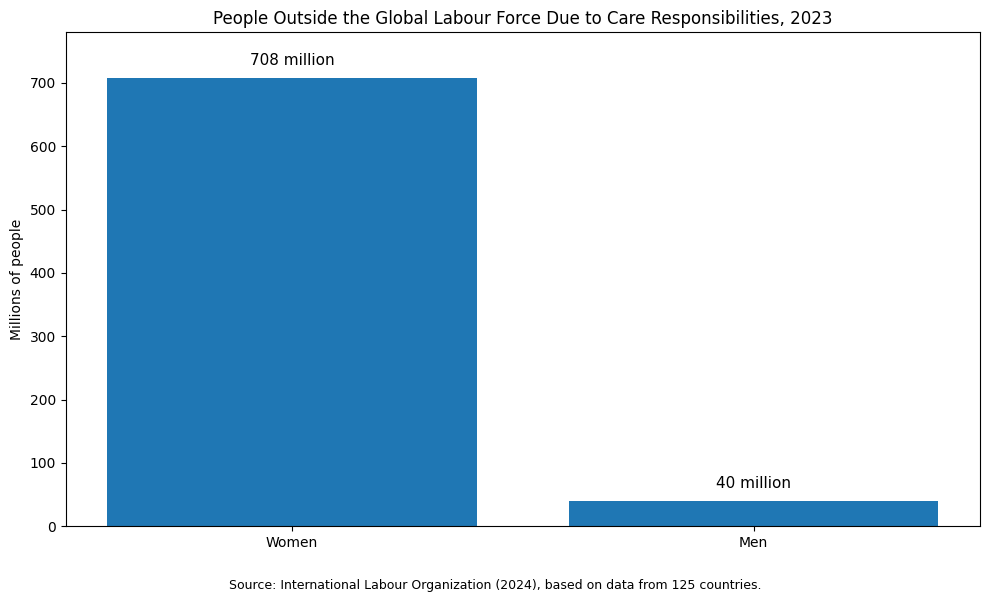
Figure 1. People Outside the Global Labour Force Due to Care Responsibilities, 2023.
Note. The chart shows the substantial gender difference among people excluded from paid employment because of care responsibilities. Source: International Labour Organization (2024b).
Migration and the Globalization of Care
International migration is another central feature of globalization. Women increasingly migrate independently to work in nursing, childcare, elder care, domestic service, hospitality, agriculture, and other service occupations.
This movement has contributed to what researchers call global care chains. A care chain develops when a family in a wealthier country hires a migrant woman to provide domestic or caring labour. That migrant worker may leave her own children or older relatives in the care of family members or another paid worker in her country of origin. Care is therefore transferred through a series of women across households and national borders.
Yeates (2004) explains that global care-chain analysis reveals an international division of reproductive labour in which care responsibilities are redistributed through migration. Her study also shows that the concept applies beyond domestic workers to occupations such as nursing, where the movement of trained professionals may benefit destination countries while creating labour shortages in countries of origin.
Migrant care workers provide services that allow other people to participate in paid employment. Yet many remain socially and legally vulnerable. Domestic work is often performed inside private homes, making working conditions difficult to monitor. Migrants may face excessive working hours, withheld wages, confiscated documents, restrictions on movement, or threats connected to their immigration status.
The global care economy therefore contains a serious inequality. Wealthier households and countries gain access to essential labour, while the emotional and social costs may be carried by migrant women and their families.
Globalization, Education, Fertility, and Demographic Change
Women’s education, reproductive autonomy, labour-force participation, and demographic change are closely connected, but the relationship is more complicated than claiming that population growth in poorer countries directly lowers wages elsewhere.
Education can increase women’s knowledge, employment options, health awareness, and ability to make informed reproductive choices. Access to voluntary family planning and reproductive health services may also allow women to decide whether and when to have children. However, women’s labour-force participation does not automatically rise when fertility declines.
Klasen (2019) found that female labour-force trends vary widely across developing regions. Participation increased strongly in Latin America, stagnated in some regions, and declined in parts of South Asia despite improvements in women’s education and falling fertility. Economic structure, available job opportunities, social expectations, and occupational barriers all influence whether educated women can enter appropriate employment.
Claims that globalization simply transfers jobs from one population to another also overlook the roles of technology, automation, industrial policy, education, corporate decisions, and labour-market institutions. Global integration can place pressure on particular occupations, but it can also create new industries and increase demand for specialized skills. Its distributional consequences must therefore be examined carefully rather than explained through population growth or migration alone.
Globalization, Conflict, and Violence Against Women
Globalization has connected political crises and armed conflicts through international arms markets, migration routes, media coverage, humanitarian organizations, and global legal institutions. These connections can mobilize assistance and accountability, but they may also allow violence and instability to spread across borders.
Women and girls face distinctive risks during armed conflict, including displacement, trafficking, forced marriage, sexual slavery, and conflict-related sexual violence. Rape is not merely an accidental consequence of war. Armed groups may use sexual violence strategically to terrorize communities, punish opponents, displace populations, or destroy social relationships.
The United Nations Secretary-General’s report on conflict-related sexual violence documents patterns of rape and other forms of sexual abuse committed in conflict settings and identifies parties credibly suspected of responsibility. The report also recognizes sexual violence as a central concern of international peace, security, and human rights policy (United Nations Secretary-General, 2024).
However, conflict-related sexual violence should not be described as unique to contemporary globalization. It has occurred throughout history. What has changed is the development of international legal standards, monitoring mechanisms, survivor advocacy networks, and global media through which such crimes are increasingly documented and challenged.
Can Globalization Promote Gender Equality?
Globalization can support gender equality, but it cannot achieve it automatically. International trade may create employment, yet women may remain concentrated in low-paid positions. Technology may support remote work, yet women without reliable internet access may be excluded. Migration may increase household income, yet migrant workers may lack legal protection. International human-rights agreements may recognize equality, yet national enforcement may remain weak.
The World Bank’s Women, Business and the Law 2026 project evaluates laws and policies affecting women’s economic opportunities across 190 economies. It reports that women hold only 67 percent of the legal rights available to men globally and that only 4 percent of women live in countries considered close to full legal equality. It also estimates that closing gender gaps in employment and entrepreneurship could increase global gross domestic product by about 20 percent (World Bank, 2026).
These findings demonstrate that economic growth and gender equality are connected. Excluding women from employment, credit, property ownership, entrepreneurship, and leadership wastes skills and limits productivity. Yet the economic argument should complement, not replace, the human-rights argument. Women are entitled to equality and dignity regardless of the financial gains that their participation may produce.
Policies Needed for Inclusive Globalization
Governments and international institutions must actively shape globalization so that its benefits are more evenly shared. This requires enforceable labour standards covering wages, working hours, occupational safety, maternity protection, collective bargaining, and freedom from harassment.
Social-protection systems must also include informal, temporary, home-based, agricultural, and migrant workers. Employment-linked benefits alone may exclude women whose work histories are interrupted by care responsibilities or concentrated in informal sectors.
Public investment in affordable childcare, elder care, health care, education, transportation, electricity, and digital infrastructure can reduce the unpaid responsibilities that prevent women from taking paid employment. Paid maternity, paternity, and parental leave should encourage a more equal distribution of care rather than treating childcare as a woman’s responsibility.
Trade and investment policies should include gender-impact assessments. Governments should examine who is likely to gain or lose from a trade agreement, which industries will expand, whether women-owned businesses can access export markets, and whether new employment meets decent-work standards.
Additional priorities include equal-pay enforcement, inheritance and property rights, access to credit, digital literacy, protection for migrant workers, reproductive health services, and women’s meaningful participation in economic and political decision-making.
Conclusion
Globalization is a multidimensional process that connects economies and societies through trade, investment, migration, technology, knowledge, culture, and political cooperation. It has created new opportunities for employment, communication, education, entrepreneurship, and international advocacy. At the same time, it has exposed unequal power relations within workplaces, households, migration systems, and global markets.
For women, globalization has produced mixed outcomes. It has enabled millions to enter paid work and build international networks, but it has not removed wage discrimination, occupational segregation, unpaid care burdens, informal employment, or vulnerability to exploitation. Women’s participation in global production often remains greater than their access to income, recognition, security, and authority.
The decisive issue is therefore not whether globalization should simply be accepted or rejected. The more important question is how it should be governed. Through strong labour protections, accessible care services, gender-responsive trade policies, legal equality, social protection, and meaningful political participation, globalization can become more inclusive. Without these measures, it may reproduce existing inequalities on a wider international scale.
References
International Labour Organization. (2023). Statistics on the informal economy. https://ilostat.ilo.org/topics/informality/
International Labour Organization. (2024a, April 15). The gender pay gap. https://www.ilo.org/resource/other/gender-pay-gap
International Labour Organization. (2024b, October 29). Unpaid care work prevents 708 million women from participating in the labour market. https://www.ilo.org/resource/news/unpaid-care-work-prevents-708-million-women-participating-labour-market
International Monetary Fund. (2008). Globalization: A brief overview. https://www.imf.org/external/np/exr/ib/2008/053008.htm
Klasen, S. (2019). What explains uneven female labor force participation levels and trends in developing countries? The World Bank Research Observer, 34(2), 161–197. https://doi.org/10.1093/wbro/lkz005
Organisation for Economic Co-operation and Development. (2021). Trade and gender: A framework of analysis. OECD Publishing. https://www.oecd.org/content/dam/oecd/en/publications/reports/2021/03/trade-and-gender_1d7b8052/6db59d80-en.pdf
Roll, Y., Semyonov, M., & Mandel, H. (2024). Gendered globalization: The relationship between globalization and gender gaps in employment and occupational opportunities. Research in Social Stratification and Mobility, 92, 100930. https://doi.org/10.1016/j.rssm.2024.100930
United Nations Secretary-General. (2024). Conflict-related sexual violence: Report of the Secretary-General (S/2024/292). United Nations. https://digitallibrary.un.org/record/4044629
World Bank. (2026). Women, Business and the Law 2026. World Bank Group. https://wbl.worldbank.org/
Yeates, N. (2004). A dialogue with “global care chain” analysis: Nurse migration in the Irish context. Feminist Review, 77(1), 79–95. https://doi.org/10.1057/palgrave.fr.9400157
Cite This Work
To export a reference to this article please select a referencing stye below:

Academic Master Education Team is a group of academic editors and subject specialists responsible for producing structured, research-backed essays across multiple disciplines. Each article is developed following Academic Master’s Editorial Policy and supported by credible academic references. The team ensures clarity, citation accuracy, and adherence to ethical academic writing standards
Content reviewed under Academic Master Editorial Policy.





